


Boston Oi! band Battery March toured Ireland in September 2026.
They spoke to Freda Hughes about politics, punk and resistance in modern day America.

photos: Freda Hughes
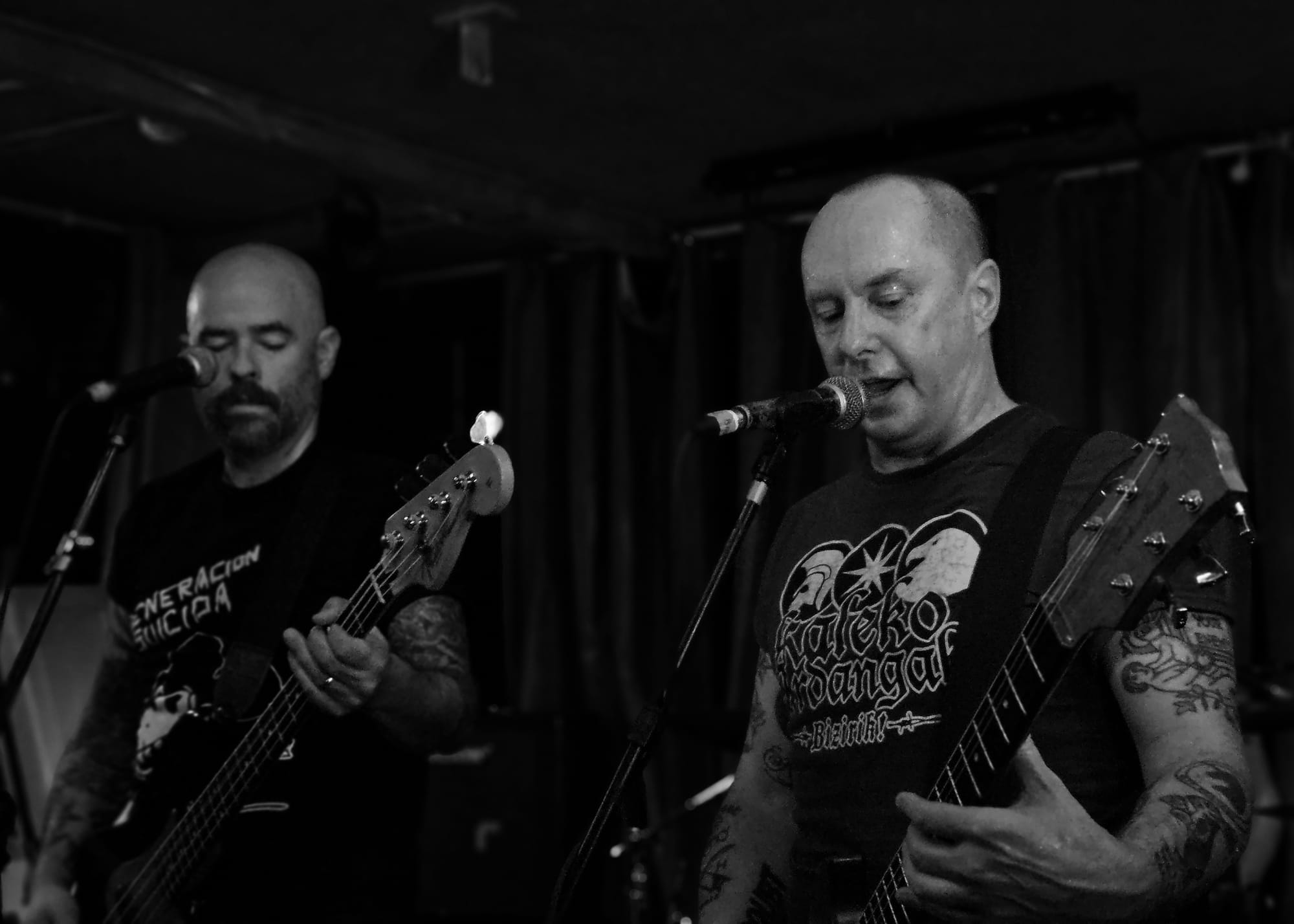
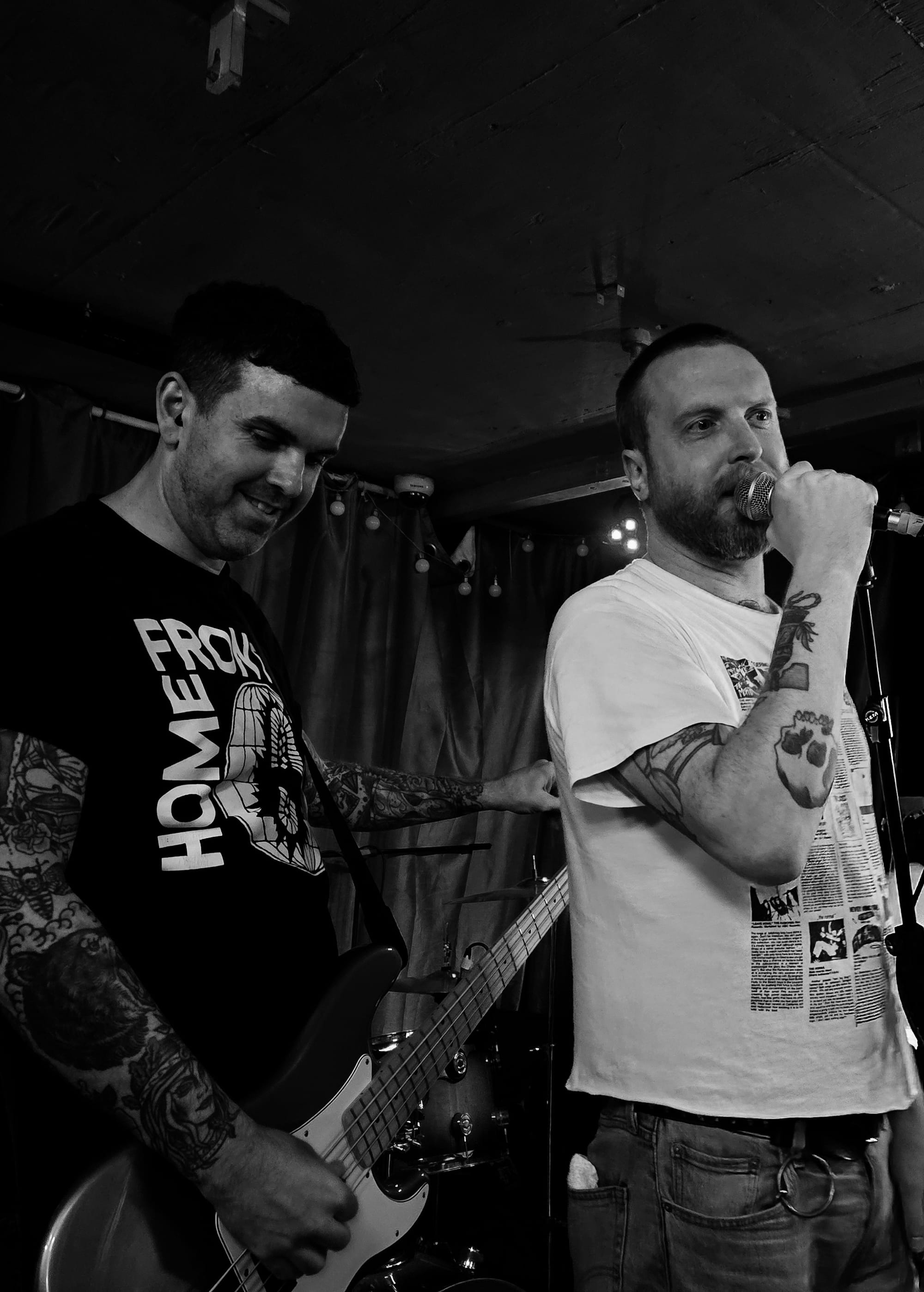
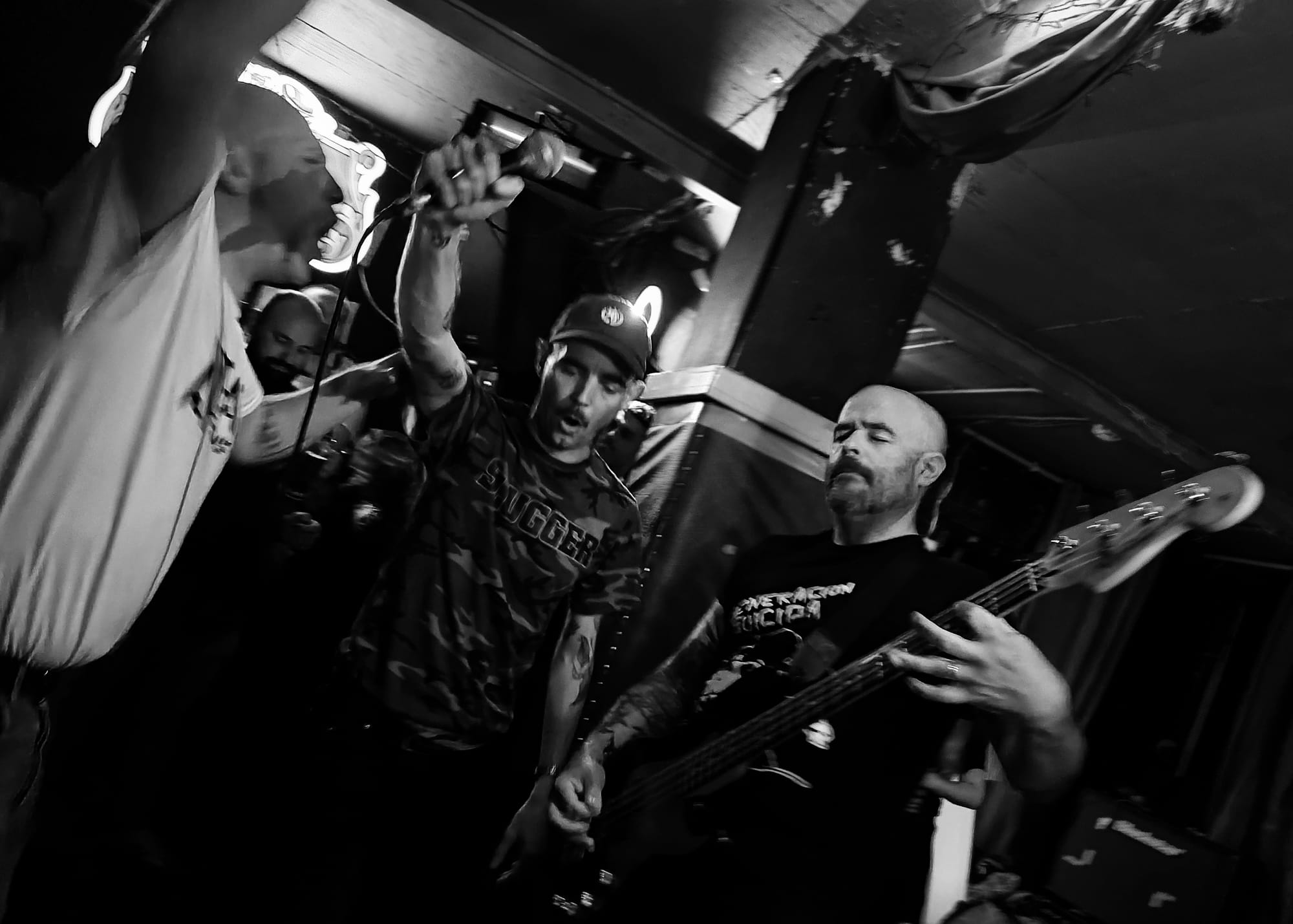
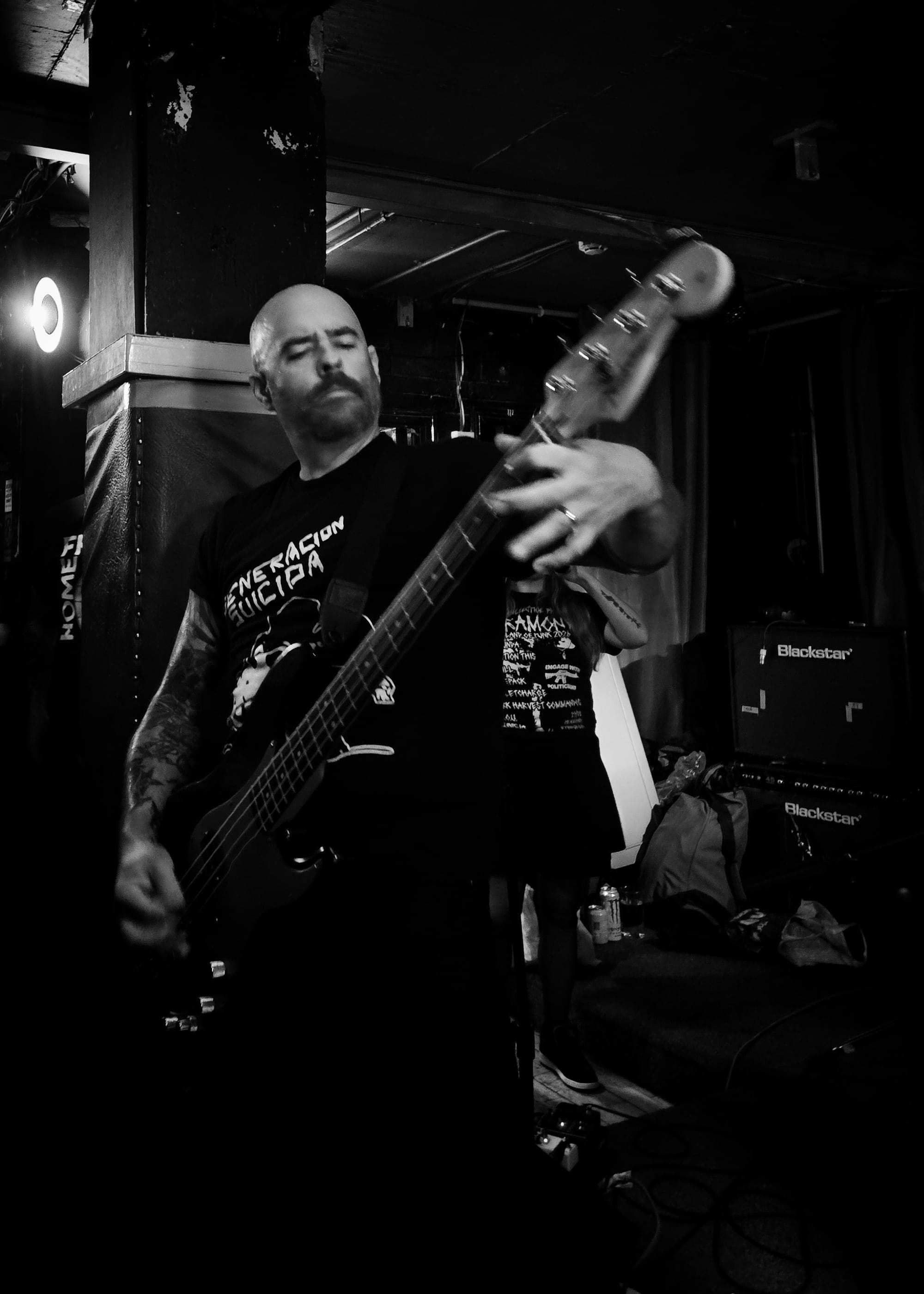
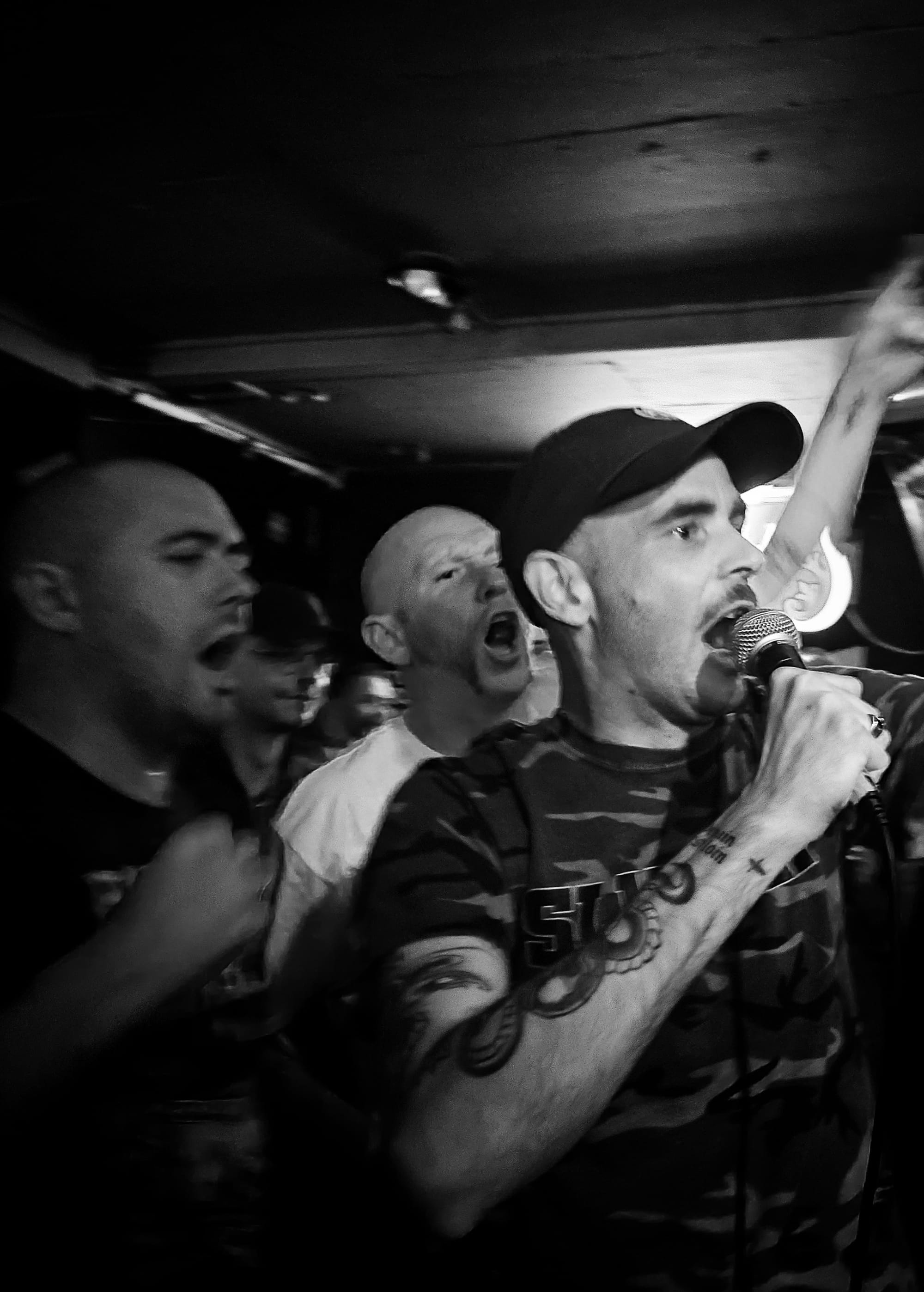
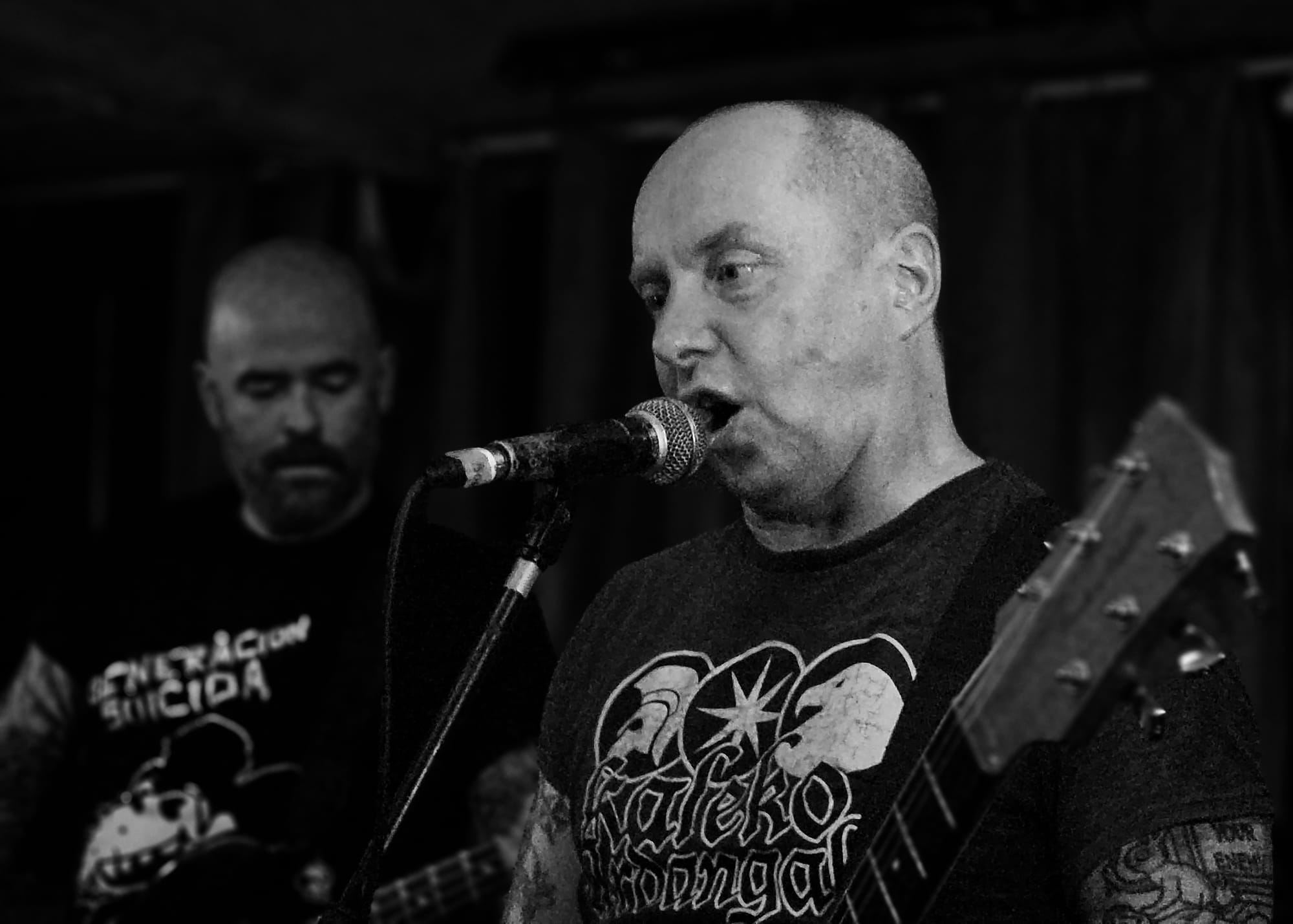
Three-piece, bilingual Boston Oi! band Battery March played in Dublin’s Thomas House on 4 September, the second night of their recent Irish tour. They played a storming set of anti-fascist, anti-imperialist bangers with lyrics in French and English about occupation, gentrification and cops being bastards. An American band singing, “An Empire where your shadow never sets. And you haven’t finished yet …. Brits fucking out!”, is not something you hear everyday in Dublin so inevitably we stayed up talking politics until the early hours of the morning. These guys know their stuff; they’ve been around the block and everything they do is political.
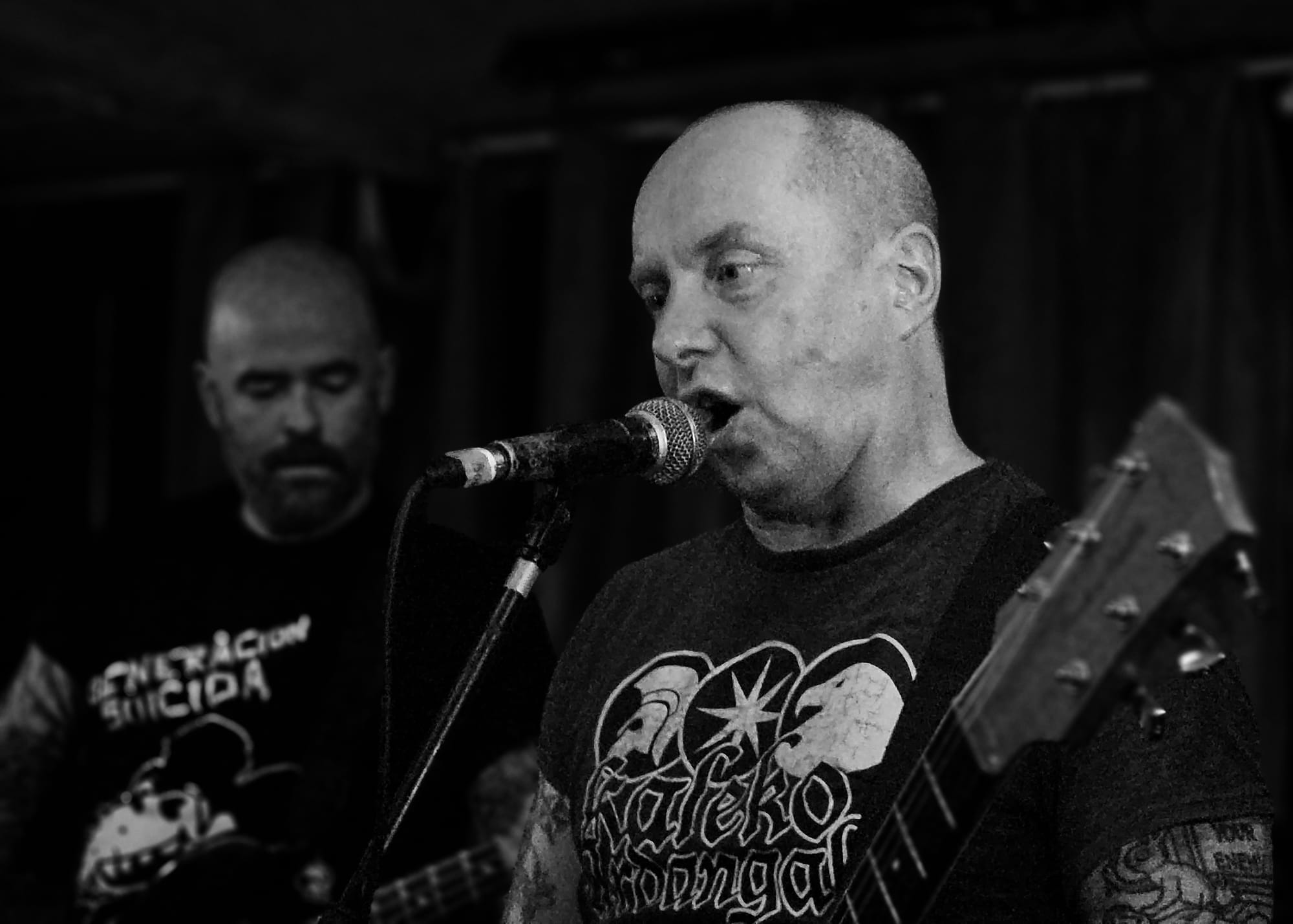
The band has had a few different line ups but was originally formed by vocalist and guitarist Morgan who grew up in France before moving back to the States in his teens. Kevin joined on drums in 2018. Although born and bred in Boston, Kevin’s family are Irish Newfoundlanders. Kevin also grew up speaking French as a second language so after including a brilliant cover of Réalité by Camera Silens on their 2019 demo, they decided to continue to write in French. In 2023 they released the Boston Eats Its Young / Futur Pour Eux EP followed by their first album Winter in America in 2024 with former bass player Clark. She left shortly afterwards, and Dan, Morgan’s old bandmate from a previous band Bread & Roses, stepped in and has been with them ever since.
So, what prompts an American band to sing about the British occupation of Ireland, the French occupation of Algeria and the evils of imperialism and empire?
Morgan put it like this: “I feel as an American, a kind of an obligation to speak out about the things that are concerning about America, and to expand that. The English have so much blood on their hands today and for the past hundreds of years. Oi! music has fundamentally English roots and it would feel silly to turn a blind eye to British history while playing music that's so rooted in England. It’s the same with France. We're singing in French, playing British music, living in America so I feel an obligation to write songs that examine the cultures that we draw on.”
For Battery March the biggest political struggle today is against the rise of global fascism. They see the Israeli occupation and genocide in Palestine, the Russian invasion of Ukraine, the MAGA movement and the Brexit movement and the ongoing occupation of the North of Ireland as all orchestrated by the same “cadre of right wing shitbags”.
Dan says: “For us specifically as Americans, the kleptocratic fascist ethnocrats really do control the levers of our government to an extent that it is well beyond what it was even five or 10 years ago. We have one political party that is an openly fascist, white nationalist, hegemonic Christian party. And then we have basically a party of useful idiots that would rather sit on their hands and just say, "Hey, we're not them”, and do nothing when they're given the levers of power. I’ve lived through the 80s and the Cold War and the '90s and Reaganomics and all that stuff, but I think this is a really uniquely different time, where it's literally the people against not just the entirety of the government, but also the entire economy because the economy is now oppressing us in newer and more creative ways.”
Morgan adds that America’s history being so firmly based on slavery has really maintained an influence that echoes for hundreds of years at this point.

Picking up on both their points Kevin says: “I spend a lot of time trying to think about how things are connected. I've been thinking a lot recently about how masculinity is tied into the source of many of these struggles. The source of many of these fascistic empires is always intertwined with some specific hyper bizarre version of masculine identity, and I think this is the source of most conflict. I mean I can't even list how many ongoing civil wars and genocides and massacres are going on simultaneously. I feel like the punk and Oi! scenes are good places for allowing men to become better and become different. There's way less macho pressure and providing space for this is important. Something that we can do every day in our lives is to try to encourage men to do better because I think that this is truly one of the things that bonds so many of these horrifying things.”
He continued: “It’s getting harder to organise in America and you have to be careful about how you do it but being quiet is not something that I am naturally good at. I think we've learned how to be prudent but honest.
Dan agreed, saying: “I think that’s spot on. It's the only way to do it because if you’re not prudent, you won't have your platform for long because it'll be shut down. We're also all white and we're all male. We're all cisgender. Like, if we can't put our necks on the line a little bit, then what are we really doing?”
The Oi! scene in today’s America
Gentrification and the suffocation of grassroots music scenes are issues facing Boston as much as Dublin. Battery March have a song about this predicament called Boston Eats Its Young. Gentrification was already rampant when they wrote it.
Morgan says: “We no longer have the framework for art that supports artists. These contexts simply don't exist anymore. It's really hard to support a scene when all the small little crappy dive bars are closing down and being replaced by places with 20-dollar burgers.”
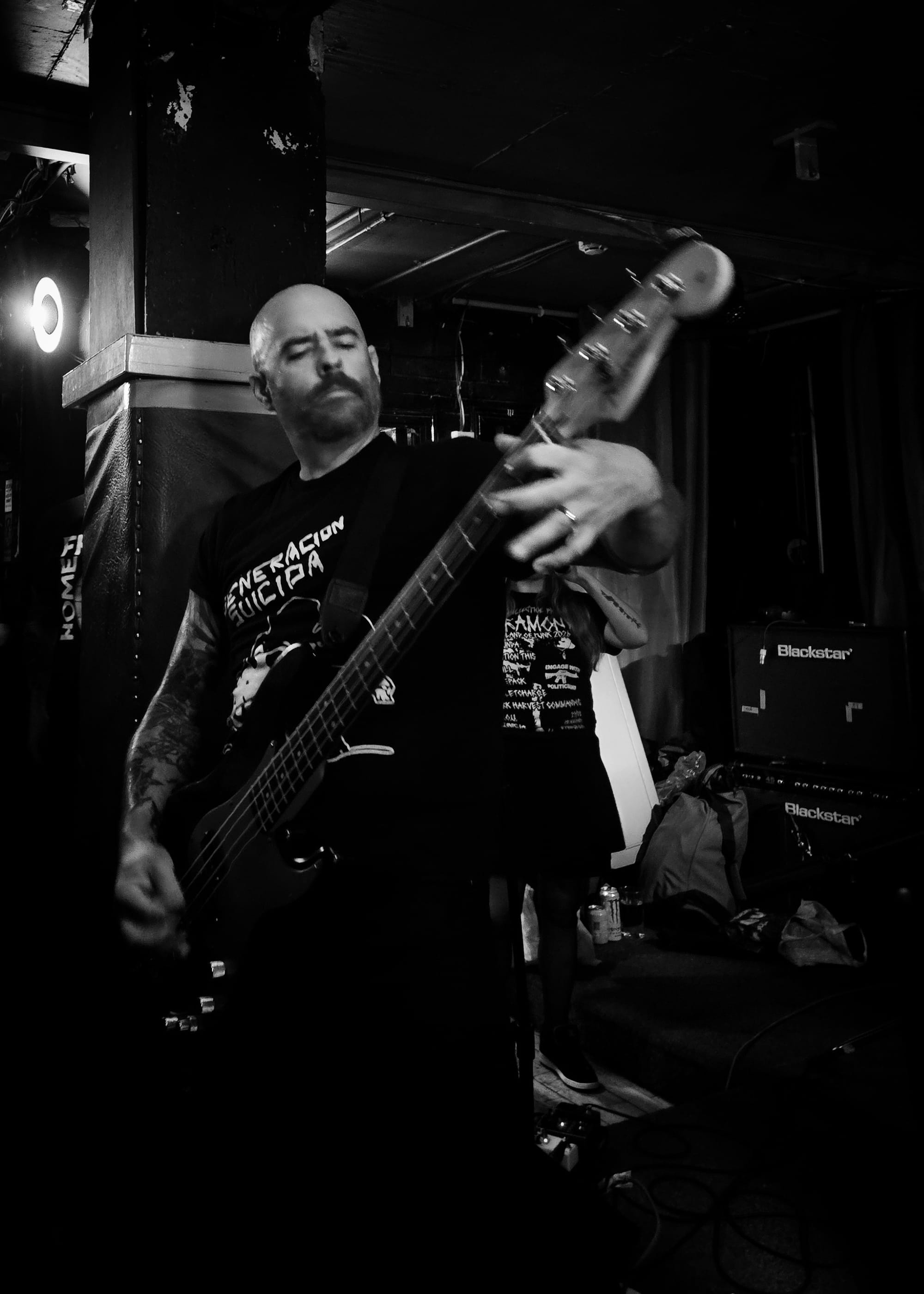
The lads have seen the skinhead/Oi! and punk scene ebb and flow in the city they call home. Boston was a city that really punched far above its weight for a little while with a really visible DIY music component and a very active scooter and skinhead scene, but the lads reckon the ‘golden era’ is long over.
Morgan says: “I live here. I like it here. It's not what it used to be in terms of how active the scene is. There are no specific skinhead nights and the same goes for the SHARP (SkinHeads Against Racial Prejudice) scene. There are still SHARPs and skins but not really organised in a sense like we saw in Ireland where the SHARPs have merch and information stalls at gigs and are politically active on the streets.”
While there’s a lot of apathy and apolitical people in the punk and Oi! scenes in America, they stress that there are also a lot of great politically active people on the scene, but they're not tightly networked.
Kevin says that Montreal, where they play often, has a really organised RASH (Red & Anarchist SkinHeads), and SHARP community and Morgan adds: “For me, Ireland was on a par with places like Montreal, or Bilbao where we’ve played. Even other parts of Europe where the music scene is maybe a little less tight knit are still much more politicised compared to America. You know, it's something I remember being more of a thing in America, and I miss it. And it's great to see that it's still that way in other places.”
In the past if Battery March played abroad with other bands, they could invite them back to America for a return gig. These days, with so many people getting held or questioned at American borders for their political beliefs, race or ethnicity, this no longer feels like a viable option. They say it's sad to not be able to feel like it's a two-way street of hospitality and discovering music anymore.
In Boston after Covid there was a bit of a dead stop, and then a reboot of the DIY underground scene. A new younger scene arose out of nowhere where in the past it was always a constant, continual passing on of knowledge now these kids were doing things differently.
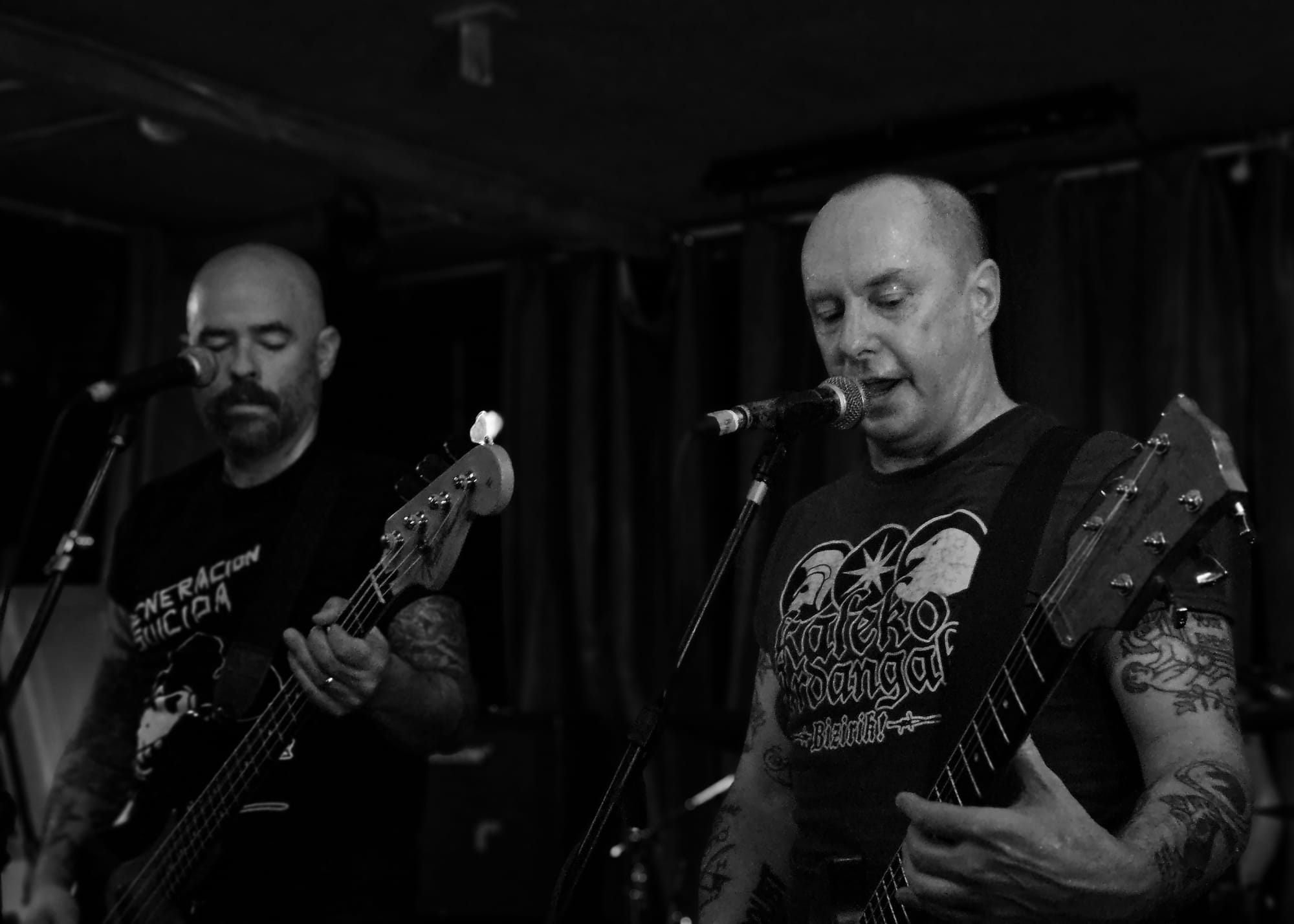
Morgan says: “I think they were able to reinvent it in a way that was, in some ways, more inclusive and broke with the trajectory. I was talking to my partner, who's a woman who was also involved in the Boston scene for years. She said, as a woman in the '90s, it was not great to the point where she sort of gave up. And I think I was oblivious to that at the time. There was a culture that was unfriendly to women, unfriendly to anyone who wasn't generally either a straight white man or someone who could get along with straight white men. And I do think, as much as in some ways the DIY scene in America got kind of scrambled after Covid, in some ways the reinvention of it managed to break loose from that. It is actually more inclusive and maybe a little less toxic than it was during what I would say was sort of the heyday.”
Dan interjects: “That's the nature of nostalgia, right? There's an old country song called The Good Old Days When Times Were Bad. We love to think about those days because it's when we were young, when we were experiencing things for the first time, but the reality is, if you weren’t part of the dominant social group or class, then things weren't good.”
Morgan adds: “Good things are happening on the hardcore scene here recently too. You see these bands that sound like a '90s tough guy band, but the band themselves and their crowd are actually very diverse. They might be hyped up and energetic, but it doesn't have the same kind of malevolent machismo that you used to see, which is great.”
So, who would Battery March recommend we check out on the American Oi! scene?
Liberty & Justice, Bullshit Detector, Slugger, The Stress, No Time, Seclusion, Lost Legion, and Boston band BadTerms who they play with fairly often. A band from Providence, Rhode Island called Klaxon, a band from St. Louis called Hard Evidence. Mess from Guadalajara, Mexico and Ultra Razzia from Montreal, Canada are one of their favourites of all time. And from France, Rancoeur and Cran.
Kevin says: “As much as it can be exhausting to tour in America, and every drive is long. It's often much harder to find places to stay, but you do encounter a lot of people still out there making music, and some of them are really doing it on a very local level where you don't find out unless you get yourself there. There is a lot of apolitical stuff too, but I don't think it's a coincidence that all the best American Oi! bands are explicitly anti-fascist, anti-racist, and left-wing politically.”
Dan adds: “The U.S. geographically is enormous so it can be segmented, but the fact of the matter is there are tons of great bands right now in the States, in Atlanta, in Washington D.C. in Texas, in California, in Chicago, Pittsburgh, and nationwide there's a ton of support when bands go on tour. Overall though there are fewer people who are Oi! fans, I think, than ever before, and that's the hurdle that we're all facing as U.S. fans.”
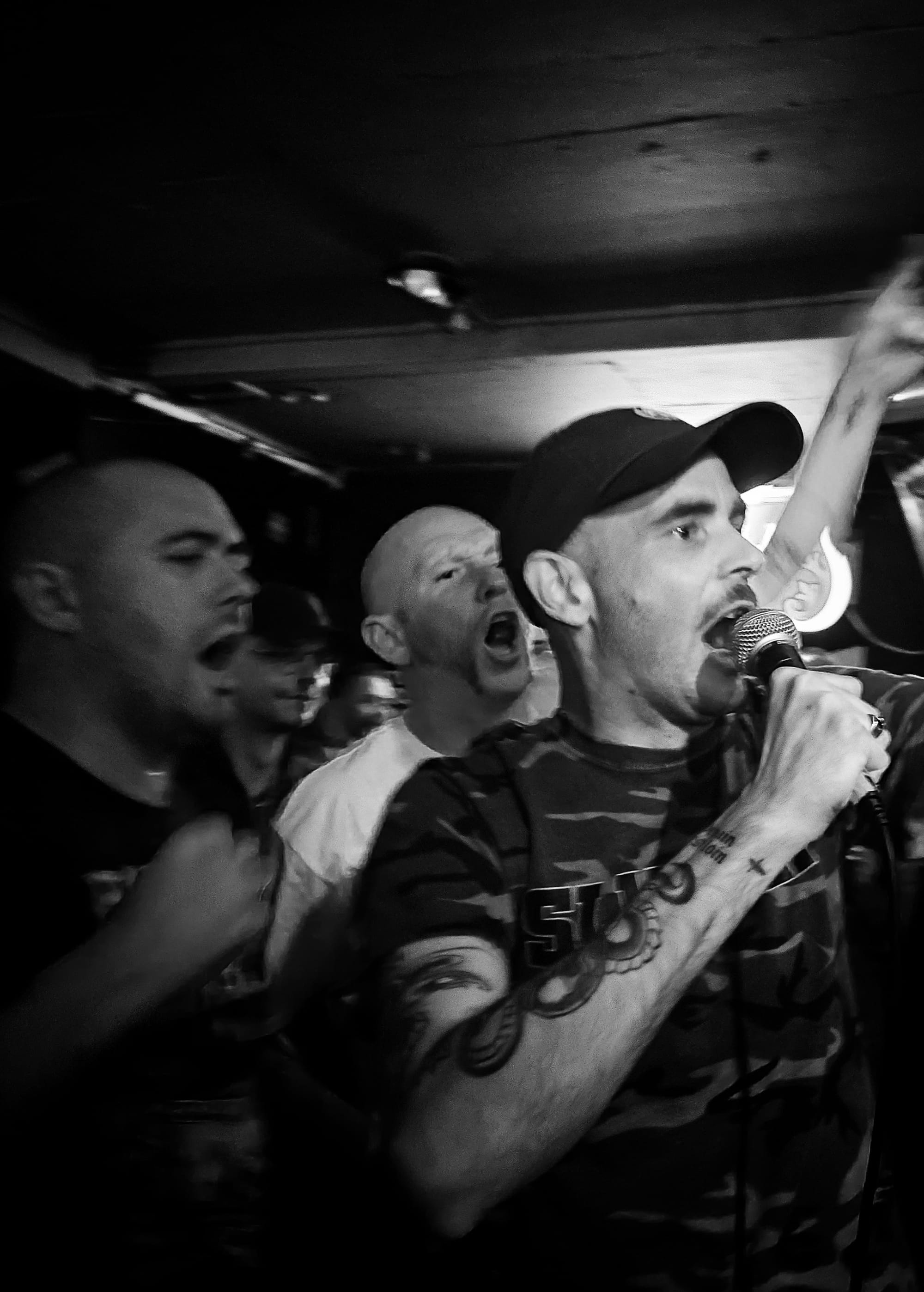
And what did Battery March think of Ireland?
Morgan says: “My personal highlight was seeing Allegiance open with Boys Of The Old Brigade, which, after getting to know them a little I wasn't surprised by, but their version of that song was absolutely incredible. I loved every show. Everybody was so kind and so generous to us, and I really feel like we made friends for life. And both houses we stayed in had great dogs.
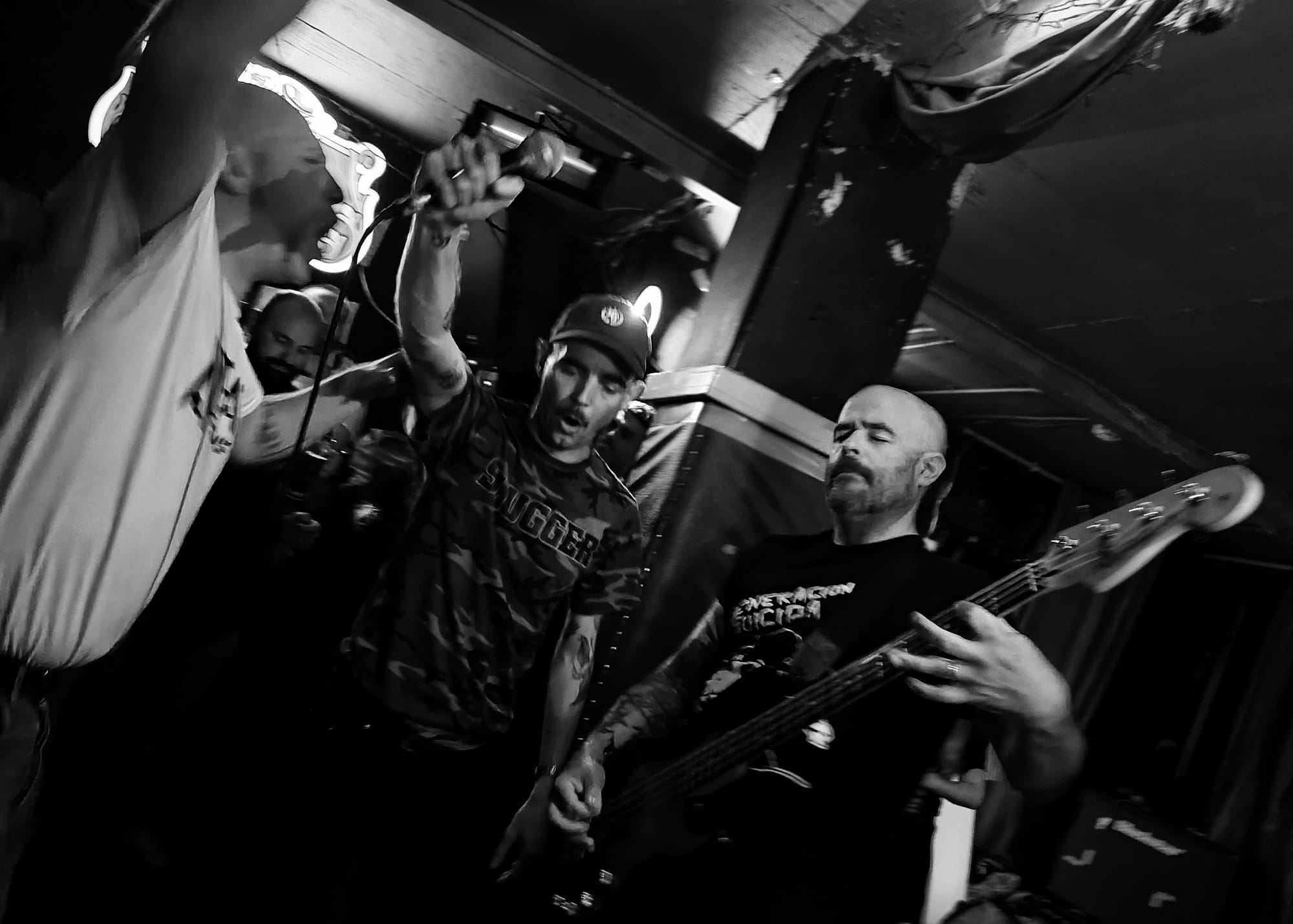
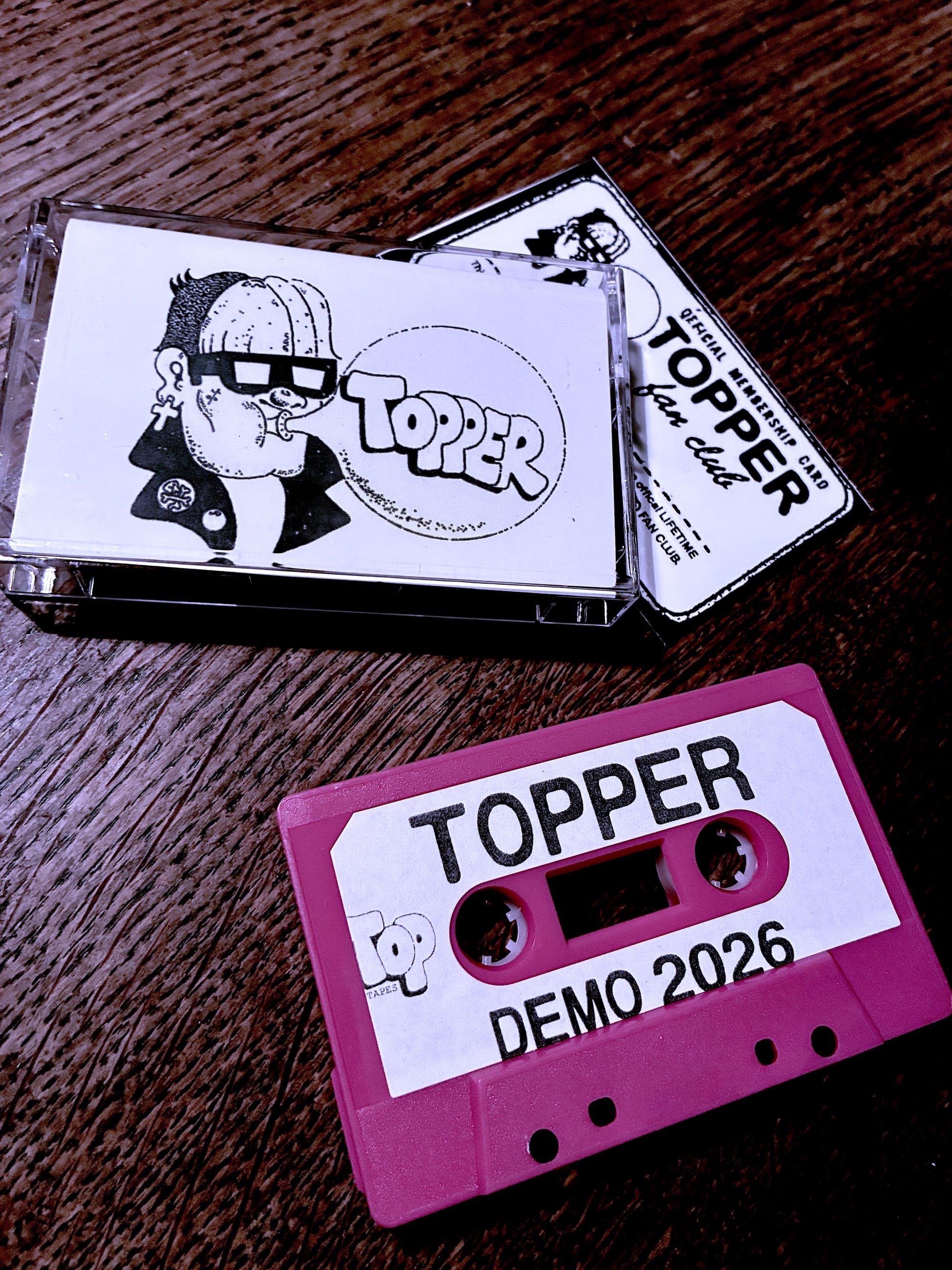
Easy Company from Cork were great. They sounded like us, but way better. I was like, I can't even keep track of what's going on. Those guys were incredible. And then Thickos really reminded me of being back in Boston. I was like this is exactly the kind of band I used to go see all the time. Mana were kind of a wild card, but they were honestly great. And we loved Topper who played with us in Dublin. Some of them are in An Slua and Mana too and the tour came about from a conversation with Mick from An Slua.
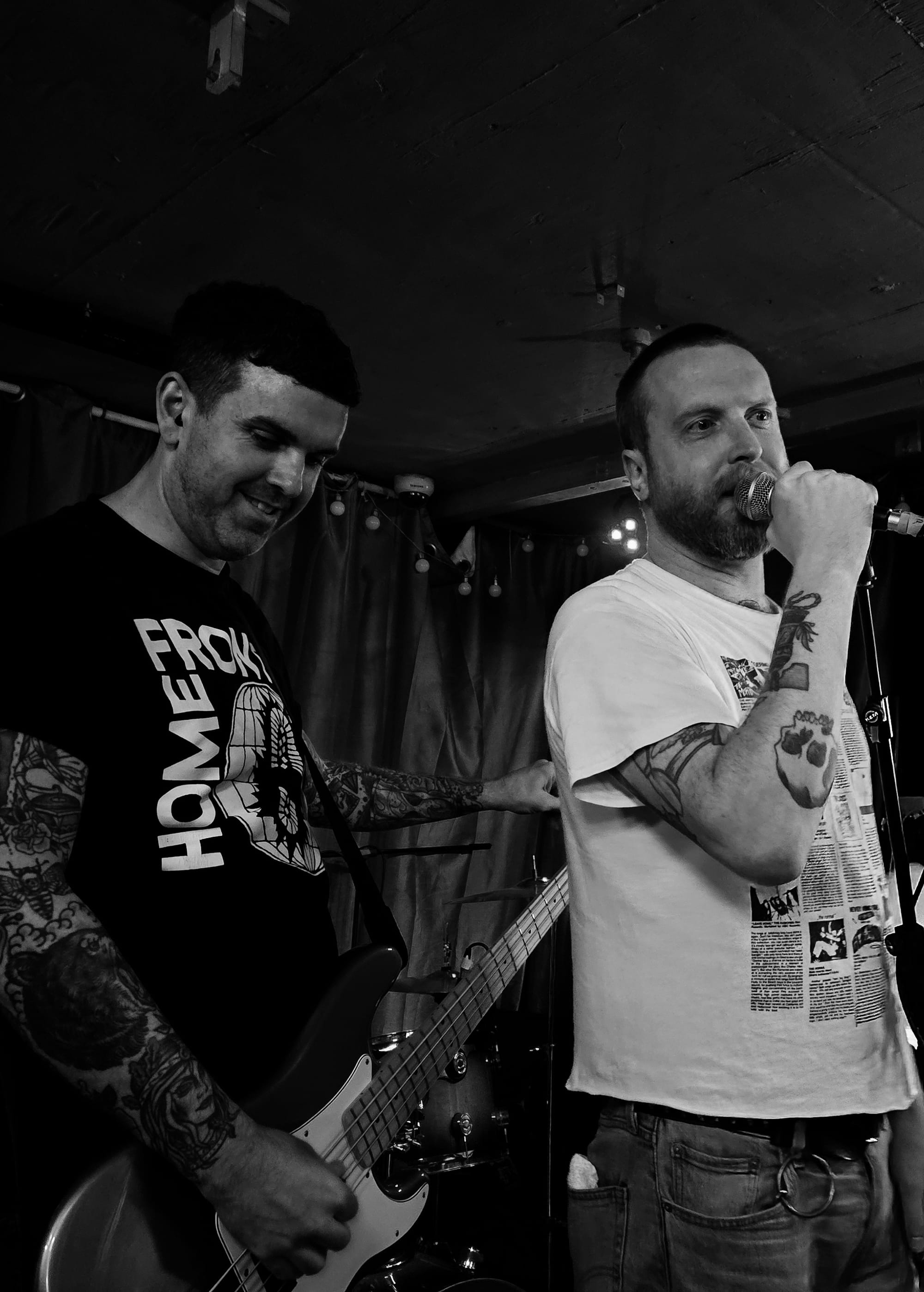
He was the one that connected us with everyone involved. A lot of people were super helpful, starting with Mick and then spreading out to Galway, Dublin, Cork and Waterford. It was all completely DIY. We stayed with the other bands we played with, and everyone was really helpful and welcoming, so other than getting there and assembling ourselves into a moving unit, we didn’t have to worry about a thing.”
What’s next for Battery March?
Battery March release a split 7” with French band Rancoeur this Autumn and their second album is set for release in February 2027. They hope to undertake a European tour on the back of its release next year so keep an eye on their Bandcamp and Instagram for details.
https://batterymarch.bandcamp.com/music
Instagram: @batterymarch.boston
Here’s a playlist of videos from Battery March’s gig in The Thomas House, Dublin 04.09.26
https://youtube.com/playlist?list=PLaZQF-4LSRvQ&si=_4-s3rOoYc0Mk6Eu
What is "Oi!" ?
Oi! punk, originally referred to as new punk or real punk, emerged in the late 70s to counter the commercialisation of punk rock. The music and its subculture aim to bring together punks, skinheads and disenfranchised working-class youth. Oi! is a battle cry against the system, unreservedly working class and grounded in everyday struggles.
About the interviewer:
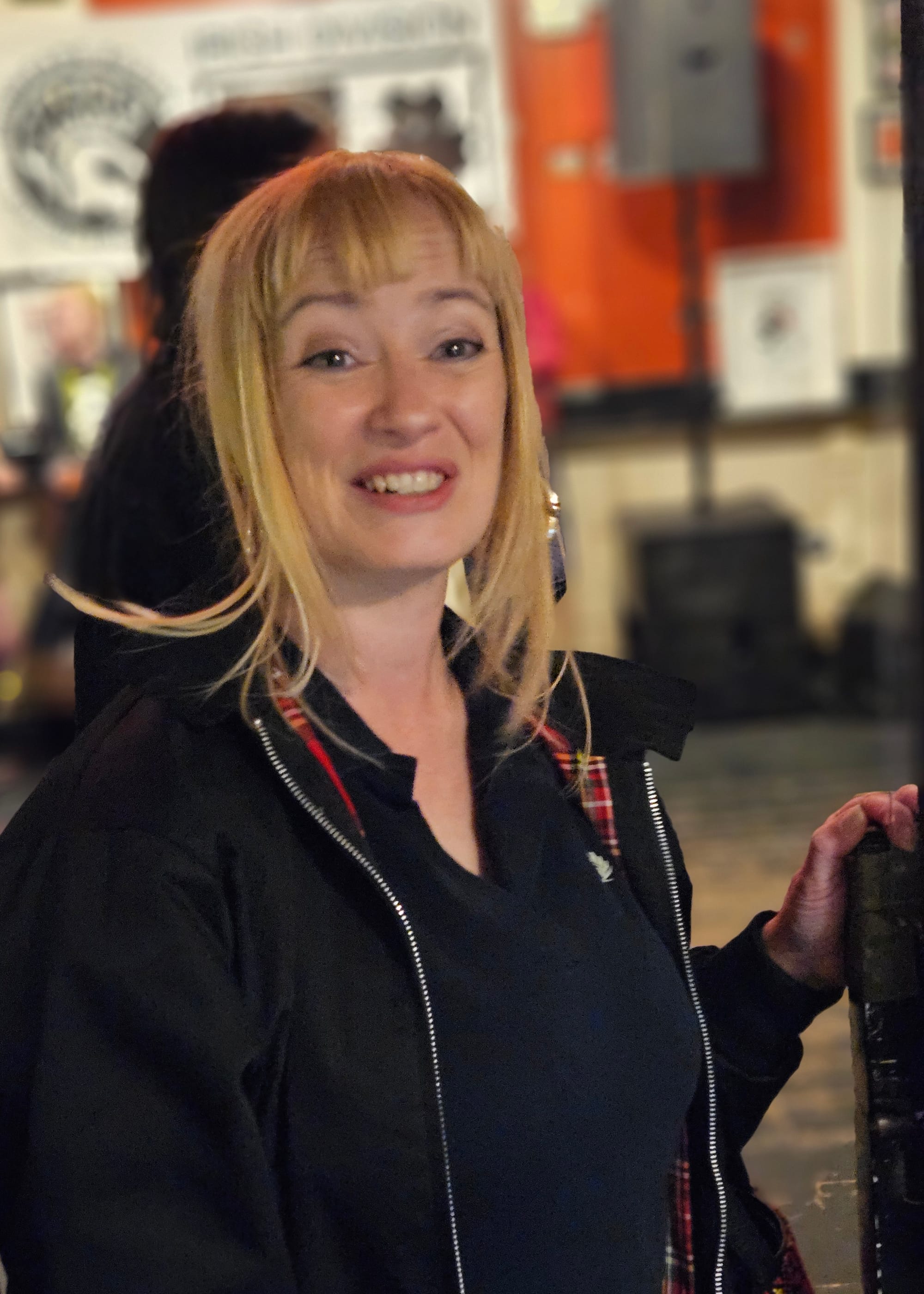
Freda Hughes is a writer, editor, music promoter and activist. She has been active on the Irish punk & DIY scene since the late 90s running nights and managing music venues. Since 2011, she has hosted punk, ska and reggae nights and promoted Traveller musicians under the moniker Poster Fish Promotions.