
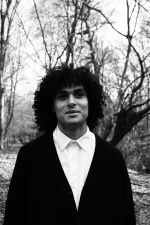

In 1960, Roibeárd Mac Cormaic – one of the last native speakers of Gaelic on Rathlin Island – was interviewed by Proinsias Ó Conluain for RTÉ Radio. Proinsias was an extremely passionate man when it came to the minoritised dialects of Gaelic. He recorded Gaelic speakers all over the country, but appears to have had a specialised interest in the Breac-Ghaeltacht regions – pockets where Gaelic clung on as a minority language. Through his efforts, the voices of local speakers in Ó Méith (Co. Louth), Muintir Luinigh (Tyrone), Rathlin, and regions of Eastern and South-West Donegal, such as Fánaid and Teileann, were preserved.
The intention of Proinsias’ trip to Rathlin was to find speakers of Gaelic whose natural speech he could record – as opposed to memorised stories or seanscéaltan (which Roibeárd made clear, he did not have). Gaelic, in this Gaeltacht region, was now in the stages of what could be called palliative care.
Proinsias met with Roibeárd in a pub, of which he was the Fear a’ Toighe at the time. They sat down together and Proinsias set his reel off recording. The most important piece of the recording – outside of the linguistic wealth of the hills and tresses of Roibeárd’s own speech – is as follows:
Proinsias: Bha an Ghaedhilg ag d’athair ’s do mháthair. (Irish was spoken by your father and your mother)
Roibeárd: Bha sí. (She was)
Proinsias: Agus bha sí agat fhéin nuair a bha tú óg. (And you spoke her when you were young)
Roibeárd: Bha sí. (I did)
Proinsias: Agus, an rabh an Ghaedhilg á labhairt ar Reachrainn mórán an t-am sin (And was Gaelic spoken a lot on Rathlin at that time)
Roibeárd: Timcheall thart ar na hoileáin … fríd na hoileáin. (All over the island. Throughout the island.)
Roibeárd was born in 1882, in Uaig, on the “lower end” of the island. At that time according to the 1911 census, as his memory concurs, it was estimated that around 30–70% of Rathliners were bilingual Irish speakers — a figure recorded by G. B. Adams in his account of the last language census in Northern Ireland. We can safely assume that the figure in Rathlin in 1882 was closer to the 70% figure, because monoglot Gaelic speakers were still living at the end of the 19th century. Frank Craig, born in Broclaigh in 1894, was asked by Proinsias whether his father and mother spoke Irish. “I never heard them speaking anything else,” he answered. “You had to [speak Gaelic] to understand what they were saying.”
Roibeárd – now speaking in English – says himself at the end of the interview:
Proinsias: How did you happen to have the Gaelic, Robert?
Roibeárd: My Father and Mother had it. Spoke nothing but Gaelic.
Proinsias: And you had it when you were young
Roibeárd: I had it, the first word that I spoke was Gaelic, I am sure. Or that I heard was Gaelic.
Proinsias: And, most of the people on the island had Irish at that time, didn’t they?
Roibeárd: They all had it. Yes.
Eighty years later, Roibeárd gives the following view on the state of the language in the island:
Proinsias: Well how did the Irish happen to die out then, so much?
Roibeárd: Well I cannot tell you that — it just, it faded out because the people left the island. And the rising generation didn’t bother with it, so.
Proinsias: Well how many people were on the island in those days?
Roibeárd: I’m sure there were 450 at that time when I was young. There are about 150 now. [Or as he says in Gaelic earlier in the recording: céad go leith]
A hindrance of the tongue
The death of the language, the depopulation of the island and the interests of the landlord class went hand in hand. In 1784, the population of Rathlin was recorded as being 1,200 – a spike in population that was reportedly due to re-possession of the island by a new landlord who maximised profits by increasing the number of farms, a history traced by J. H. Elwood in his 1968 study of the island’s population. By 1841, the population had fallen to some 1,010 people. After the spring of 1847, the population of Rathlin fell by 10%. The fall was due to the “Potato Famine”, as it was sardonically called by the wife of Mr R. Gage, the landlord of Rathlin at the time. “It is rather remarkable,” the same Mrs Gage would sneer, “that for some years past, and particularly since the famine set in, the fish have to a great extent deserted the coast.” Mrs Gage – whose manuscript history of the island survives as a photocopy in the Queen’s University library – does not, of course, cite her sources for the claim. The population today is exactly the same as Roibeárd had it, 150.
This depopulation exacerbated the economic decline of the island, and by the onset of the 20th century the community was largely made up of “old people and children at school with a diminishing able-bodied group”. The decline was greatest among women, and this was “most marked in those of working age”. Just like the rest of the countryside, a depopulation was happening, and the Gaeltacht community of Rathlin was being pushed out of its local area, lured by the magnetic pull of the smoggy cities where Gaelic had not been spoken natively for a generation or much longer.
One woman who swirled in the vortex of this economic push-pull was Isabella McCurdy. Of Claigeann, born in 1894, as a child of 13 years of age she was sent to Belfast to find work alongside her sister, who later became a missionary in Sri Lanka. Isabella would live in Twinbrook for the rest of her life. Nonetheless, she preserved a remarkable memory of Rathlin Gaelic and a recording was made of her in Cumann Chluain Ard by Seán Mac Seáin and Liam Mac Carráin for Teilifís Pobail Feirste in 1979.
As for the young people of the island, the 1968 report on Rathlin’s population weighed the “lure of the factory” and “box-like urban existence … particularly for the women” against “the harshness of life on an offshore island”. But their preference can hardly be chalked up to some materialistic lust. That is only what the extract, in its misogyny, seems to portray.
In reality, what Roibeárd had to say was true: “the rising generation didn’t bother with it.” When a language is scalped from its economic system, when the way of life that binds a Gaeltacht community together – whether that be fishing, farming, or otherwise – is intentionally dragged into an anglophone centre where it can no longer survive, it ceases to be an advantage and becomes a hindrance. The retrospective values of the Gaelic language, and pain of losing a connection to the land and the folklore of the country which you inhabit, often need to be shut down and locked away when keeping your language means emptying your stomach. As we who were raised in the Galltacht have been told many times: “Gaelic is a dead language, don’t bother with it.”
Neither righteous nor common – but necessary
I feel it’s important to share some words from Rathlin Gaelic just to appreciate the wealth that was indeed lost. Just like the Gaeltacht regions that still survive, the language of Rathlin was complex, idiomatic and reflected life on the island in a way that only a dialect containing centuries of memories could do.
Who but the Rathliners, their friends in Islay and perhaps those in the Donegal Gaeltachtaí would understand the true meaning of corraic – without needing to use the English “top-knot” to explain it – when the dictionary simply says “a projection, obstacle”? How could one explain what it means to be ar a’ daoraidh without seeing one go into what we would call “a blind rage”? What was lost cannot be understated.
Even after the starvation of the Rathlin Gaelic community in the spring of 1847, monolingualism persisted into the early years of the 20th century. Within one lifetime, the language was dead. This can still happen to Gaoth Dobhair, Toraigh, Rann na Feirste, or Inis Oírr. If we do not protect the rights of the people to housing, land and food – the things that counter depopulation – then in seventy or eighty years the generations to come may have to listen to recordings of our voices to understand who we once were. Worse still, all memory of the Gaelic language, as has happened on Rathlin, could be forgotten. (It must be said, however, that many Rathliners, Glenspeople and Gàidhlig speakers in Islay remember very well the Gaeltachtaí that existed in Co. Antrim that many of us in Belfast now believe went 400 years ago with the plantation.)
I will try not to repeat any figures already reported regarding the present day. In this very publication, Tadgh Ó Cuill-Maonlaí has already given a clear picture of the situation in the Gaeltacht and how dire it truly is. All I want to express here was what we risk losing if we (but more importantly, the governing bodies in Stormont and Dublin) fail to protect these communities.
Although it’s not a righteous nor a common thing to say as a member of the left-wing bloc, our victory is not certain. Proinsias Ó Conluain would return in the modern day to those areas in which he recorded dying voices to find no trace of the Irish he once heard. But Gaelic is not dead, and dialects can be revived. Only if the Gaeltacht lives.
The Rathlin words quoted here were collected by Aoidhmhín Mac Gréagóir and published in the second edition of Patrick S. Dinneen’s Foclóir Gaedhilge agus Béarla (1927). My thanks to Ciarán Ó Duibhín for republishing them in his Foclóir Oirthear Uladh.
Noah Mac Seagháin is a Gaelic Language researcher who specialises in the Antrim Glens’ dialect of the Irish Language. He currently teaches the dialect on Substack and on Instagram via his online centre Ionad Iníon Dubh.