
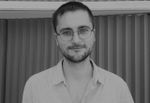


Joe Kavanagh, originally from Waterford, is a Dominican priest based in the Black Abbey in Kilkenny. He spent three decades working as a priest in the Caribbean island of Trinidad, where he also taught in the seminary. While there, he was confronted by the growing Black Power movement. Initially discomforted by it, he came to embrace its principles. In this interview with An Clogán's William Foley he reflects on what he learned about the philosophy and practice of justice.
William Foley: How did you end up going to Trinidad?
Joe Kavanagh: I joined the Dominican order at seventeen. When I joined there were over a hundred students, and it was a great place; we played football every second day. At that age you don't miss home much. I was ordained in 1963. I was 24 years old. I got home, and my parents and sisters had grown up — I'd missed a lot of family life.
Then I was sent to Rome, I had wanted to do philosophy, but I was told they needed someone to do canon law, and you did what you were told. As it transpired, it was a very fortunate time to study church law — Vatican Two was happening, and the whole code of canon law, which had been there since 1916–17, was by then out of date. We had a group of brilliant Spanish professors, mostly Catalans. They said we can't deal with a text that's going to change, so we'll deal with the philosophy of it. They gave us a great grounding in jurisprudence: Roman law, elements of civil law, but above all an attitude to law. For that I was ever grateful.
I was thirty years old when I completed my studies. I got my assignment in the post. I was debating — it could have been India, Tehran, or Ireland. Ireland had plenty of canon lawyers, so they were superfluous to our needs there. The old provincial just sent me off to Trinidad. I had a month's notice.
William Foley: How did you find the atmosphere on the island?
Joe Kavanagh: Trinidad has an extraordinary history for a small country, not even as big as Munster. There are two islands: the main island of Trinidad and Tobago. Tobago is your typical Caribbean island — beaches, lovely sea. Trinidad was jungle and industry: sugar cane, various colonisers over the years — French, Spanish, Dutch, English. Around the late 1800s the English took over and sugar became the main thing; they made Trinidad the sugar base for Tate & Lyle. The country was really just an adjunct to the needs of the British Empire.
The majority of people in Trinidad were children of migrants or of slaves. You had Afro-Caribbean people whose ancestors had been brought over as slaves, then the largest group, the East Indians, brought in as cheap labour after slavery was abolished, then the Chinese after the revolution in China, the Portuguese, the Syrian-Lebanese.
It was a lovely, scruffy, rough-and-ready atmosphere. Port of Spain had a certain enchantment: we had an old car at the cathedral, and if you were using it you'd leave the key in when you parked. Windows were never shut because the salt air corroded everything and everything got stuck, so nothing could really close anyway. It was an idyllic existence — but an unreal one, as it turned out.
I arrived right at the end of that idyllic time — in 1970. Then you had the Black Power movement: the National Joint Action Committee, their little weekly stencilled newsletters, very scary to read. Suddenly you became aware you were white, in a way you had never really been before. Some of the older guys found it very hard — they were nostalgic for the earlier times.
William Foley: Traditionally, would black people have been at the bottom of the social ladder in Trinidad?
Joe Kavanagh: We didn't think so at the time. People just accepted the status quo — Afro-Caribbean, Indo-Caribbean, Chinese — until suddenly Stokely Carmichael, Malcolm X, and the others started making radical statements about what was happening in the States. Trinidad had a very strong culture of education, mainly due to the Holy Face Sisters and the Spiritan priests, who had set up colleges there. A lot of Trinidadians went to the States to continue their studies, and they brought the ideas back. It was a laid-back culture in the early seventies, but then when the injustice of the way people of different colour and nationality were treated became apparent, the atmosphere in the country changed in the space of about a year.
I was put into a parish in Belmont, which was the headquarters of the Black Power movement, and I was the only white man living there. I was, by temperament, a timid kind of person. I don't like confrontation. A few of us younger men got together and said we'll have to open up some communication somehow. We decided to ask if we could go into the schools. By law every school had to give one hour of religious studies per week. We went into schools that weren't run by the church, and found the kids were temperamentally kind and courteous but ideologically stirred up.
William Foley: How did the rise of the Black Power movement impact your work as a teacher and as priest?
Joe Kavanagh: It was quite tense at times. I was still struggling to find my feet as a teacher. I remember at one stage finding it very difficult to journey up to the seminary while running a very busy parish, so I suggested the students come down to me for an afternoon a week. One day I was going along a little place called Picton, downtown — very run-down, a number of rum shops. A little man jumped out of one of them, saw me, stood there as if he were ten feet tall, said "P.W. Botha!" — and gave me one big spit, right in the face. I came back feeling distraught.
Some of the seminarians had come down that afternoon. I told one of them — Clyde Harvey, brilliant fellow, who later got his PhD in Louvain and is now the bishop in Grenada. Clyde said: "Joe, that old man's great-great-grandmother spat on your great-great-grandfather." He meant that I was walking into a place that was gradually upending my sense of identity. I was coming from a position of privilege, and that inevitably shapes your attitude, no matter how much you read.
William Foley: Was there a change not just in your personal views, but in your broader philosophy — how you understood the gospel, how you understood justice?
Joe Kavanagh: Yes, though it's hard to identify exactly where a shift takes place, and any shift I made was never adequate. Things like loving your enemies: very rosy in the abstract, but when a glob of spit is still on your face, love is challenged. Clyde Harvey's little comment helped you see that we have attitudes baked into us without our being aware of it. I went out there with something baked into my system that took a long time to change.
I started reading James Baldwin. He balanced somewhat the rhetoric of Malcolm X and Stokely Carmichael. Baldwin was more a wounded man who worked from his woundedness, and he wrote some powerful things. And even here in Ireland now, I get very uneasy when I hear people — even among our own — identifying someone by their colour or ethnicity or religion. That's putting people in a box. Baldwin brought it out very clearly: the ghettos in the States are just one instance of a global attitude we have to dealing with the Other.
William Foley: Carmichael and Malcolm X weren't Gandhi figures — they were very aggressively, sometimes literally violently, challenging structures of power. How did you feel about that?
Joe Kavanagh: By temperament I lean towards the peacemaker. But I have a grudging respect now — which I wouldn't have had then — for that particular rhetoric and attitude. The seminarians I had in class would challenge the whole European mindset, and I began to grapple with something that had the whole colonising dynamic built into it. I am convinced now that the dichotomy between religion and politics is a false one. You can't box things in. Life is a wilderness partly because you have to hold the two together.
I was fortunate to have been taught an approach to law that showed where law fits — that it's not the last word on everything. The tendency in the church was always: what does church law say? That's it, full stop. But our Spanish professors had said no: law is at the service of justice. We tried to hold onto that: where law wasn't serving justice, it was inimical to justice.
William Foley: To go back to the question of engaging with the political: how do you feel about Pope Francis, and now Leo, being very direct about what's going on in Gaza? Some would say it's wrong for the Pope to be too involved in world affairs — that it's a spiritual office, he should be there for everyone whatever side they're on.
Joe Kavanagh: I found myself very excited with John the Twenty-Third. What was exciting about him was that he seemed unafraid — he opened the windows. Then you had two popes who felt like they were trying to put everything back in a box: Benedict and John Paul II. Both very different, but both that impulse. And then Francis comes along, from his own story, and says things that upset people. I think one of the most wonderful things to come from Rome was the first letter he wrote — the Joy of the Gospel. Fabulous. I kind of like him. I could hug him, you know.
What I like about Leo is that he's his own man. And I think Leo is actually more able to engage with politics in his way than Francis was. Francis would jump in — "Who am I to judge?" — and out the window went a lot of certainties. He would also upset a huge number of people, some of whom probably needed upsetting. But you can't as easily put Leo in a box, and yet both of them are great. John Paul II was hugely charismatic, but he tried to put everything back into an orthodoxy that I found limiting. Benedict the same — very bright man, but very defined. They all have a place, I suppose, and maybe they remind us that you never quite get the full deal. I'm delighted that Leo has decided to speak obliquely to what's happening in the States, because it must be difficult for him, with so many people pulling him in different directions. Don't get pulled into a camp.
William Foley: How do you think things are going to go in the future? Will the spirit of Vatican Two continue to develop?
Joe Kavanagh: I'm more hopeful now. But I think a bigger thing altogether is climate change, and we're not engaging with it. The world is being distracted by the powerful. What Greta Thunberg and people like her were saying is being sidelined. I have a feeling climate is going to crash in on us, and all these wars and stupidness will be shown for what they are — but it may be too late by then.
William Foley: Practically speaking, the Church has declined in Ireland, at least numerically, there's been a significant decline. Do you see any prospect of stability or resurgence?
Joe Kavanagh: The decline in vocations? Well, that's a blessing.
William Foley: A blessing?
Joe Kavanagh: We have bought into the clerical thing so much that we can't get out of it. We're baptised as Christians, and then the process very quickly becomes about priests, because the priest was a figure of authority and power in society. But the role of priests in the Gospels was a totally different thing. The priesthood had become a power block by the time of Jesus, and they killed him. He threw down the gauntlet at the priesthood. And then when we got involved in the whole Constantinian settlement in the fourth century, we resurrected the clerical priesthood. The priest has usurped so much that people have become passive, and that passivity has become the pathology. Ireland is a classic case.
William Foley: So if Jesus were to come back today, he'd be very much against clericalism.
Joe Kavanagh: Yes. And it's not just the awful things we've done — it's the mentality. I have never signed myself "Father," because I find it patronising. What does matter is if you can see your role as one of the many links between the ground we're on and the spiritual. The priesthood has a place in that. But because it has become so embedded in structures of authority and power, it's almost impossible to imagine the Pope simply becoming a poor man if he wanted to. We're baked into it.
We made a decision in Trinidad that the church in Ireland is only beginning to approach now with all this talk of synodality. The Black Power movement there actually shook all authority. Fortunately we had two people in leadership who could relate to it and learn from it. We said: empower the lay people. So they set up a thing where every ten years there would be an assembly lasting a year — a whole gathering of communities around the country to reflect: what are we learning, what are we doing, what can we do? It wasn't clerical-led, even though clergy tended to be among the facilitators.
We also ran a summer school every year — drama, poetry, liturgy, theology, philosophy — and every parish was expected to send a few people and pay for them. You built up an educated cadre. When I needed to go home to Ireland because my parents were elderly, I wouldn't look for a priest to take my place. I'd get Jeffrey, the mechanic down the road. "Jeffrey, I'm going home for a month." "Right." He had a wife and two children. He'd move into a room in the presbytery, be on call if someone was sick. Jeffrey could baptise, hold a morning service, do weddings, do funerals. He didn't say Mass or hear confessions, because he wasn't ordained. But everything else, yes.
William Foley: Should the church be talking more directly about capitalism?
Joe Kavanagh: Oh yes. But we're so compromised it's impossible to speak with integrity. We're so shaped by the capitalist world. For me to get up and say something about welcoming migrants, and yet not give them a room in this house — there's something not right about that, you know?
And the church has been largely silent. A lot of it is shame — shame about our own sin and sinfulness — but also because we're so bound up in structures. There was a priest in Tallaght who, when people were sleeping rough — many of them on drugs, as it turned out — used to bring them in at night and get old mattresses. He had them sleeping in the furnace room, which was warm. God love him. When he'd go away he'd ask me to keep it going, and I would. But when the authorities heard what was happening, and the insurance people got involved, our superiors had to stop it. We'd be uninsured. These are instances of how we sign up to a system that has an awful lot wrong with it.
I find it very hard to speak with integrity. I will share on the gospel and hope it finds some soil. But to do so with any integrity I have to take off my shoes, metaphorically speaking. I don't always do that. And yet I do see a place for people like Leo — or any of us — speaking about issues of justice, but doing so from a ground of humility, because we're not walking the walk anywhere near enough. You'd better give me absolution now, because I've just made my confession.
Joe Kavanagh, OP, is a Dominican priest. Originally from Waterford, he spent three decades on the Caribbean island of Trinidad, working as a parish priest and teacher of canon law. He is currently based at the Black Abbey in Kilkenny city.
William Foley is an editor at An Clogán.