

In the modern political lexicon, republicanism is often misunderstood or reduced to mere anti-monarchism. While rejecting hereditary rule is a core tenet of republican ideology, this simplification neglects the radical roots of republicanism as a vision of self-rule. For Irish republicans, this principle transcends institutional design or opposition to monarchy; it is about the reclamation of sovereignty – political, economic, and cultural – from the forces of domination, whether they be colonial, capitalist, or imperialist. In the context of Irish history and the global challenges of the 21st century, Irish republicanism offers not just a critique of power but a transformative framework for collective liberation and self-determination.
Republicanism and the Struggle for Self-Rule
Republicanism, at its core, is the belief that power derives from the people and that the legitimacy of governance lies in its accountability to the governed. This idea, radical in its inception, stood in opposition to both monarchy and the broader structures of domination: empire, feudalism, and later, capitalism. Irish republicanism developed in this tradition but distinctively responded to the conditions of British imperial rule. The United Irishmen of the 1790s drew inspiration from the revolutions in France and America, advocating for a republic that would unite Irishmen of all creeds under the banner of liberty, equality, and fraternity. Their vision of self-rule was not limited to institutional change but demanded a wholesale restructuring of Irish society – a republic worthy of its name, not only free from British rule but emancipated from the systems of oppression that sustained it.
This radical ethos carried through successive waves of Irish republicanism. The Land War of the late 19th century sought to dismantle the landlord system that kept Irish tenants in poverty. The First Dáil's Democratic Programme of 1919, while never yet fully implemented, articulated a vision of self-rule that placed the well-being of workers and the marginalised at its centre. It stated: “We declare in the name of the Irish nation that we desire our country to be ruled in accordance with the principles of liberty, equality, and justice for all.” The idea of self-rule here was expansive – encompassing not just political independence but also economic justice and social equality. For Irish republicans, the struggle was not merely about replacing British rule with Irish governance but about transforming the structures of power to create a republic of equals.
As we consider republicanism today, we must revisit and expand upon this radical tradition of self-determination. In a globalised world, sovereignty is no longer confined to national borders. The forces of global capital, climate collapse, and geopolitical conflict have eroded the power of nation-states to act autonomously. Yet, the republican commitment to self-determination remains relevant, offering a framework to resist domination in all its forms – whether exercised by imperial states, multinational corporations, or undemocratic institutions. The 1981 hunger strike, in which ten men gave their lives, exposed the brutal reality of British rule in Ireland – one of centuries-long oppression, echoed in Britain's colonial atrocities across the world. The strike followed the broken promises of 1980, with the prisoners insisting that any deal must be firmly secured. International solidarity was profound, with protests from the Basque Country to Tehran, where the British Embassy's street was renamed Bobby Sands Street – a name it still bears. Recognising the power of solidarity, Irish republicans have stood with struggles from South Africa to Palestine, knowing that to resist oppression is to ensure no struggle stands alone.
The Intersection of Irish Republicanism with Gender and Feminist Activism
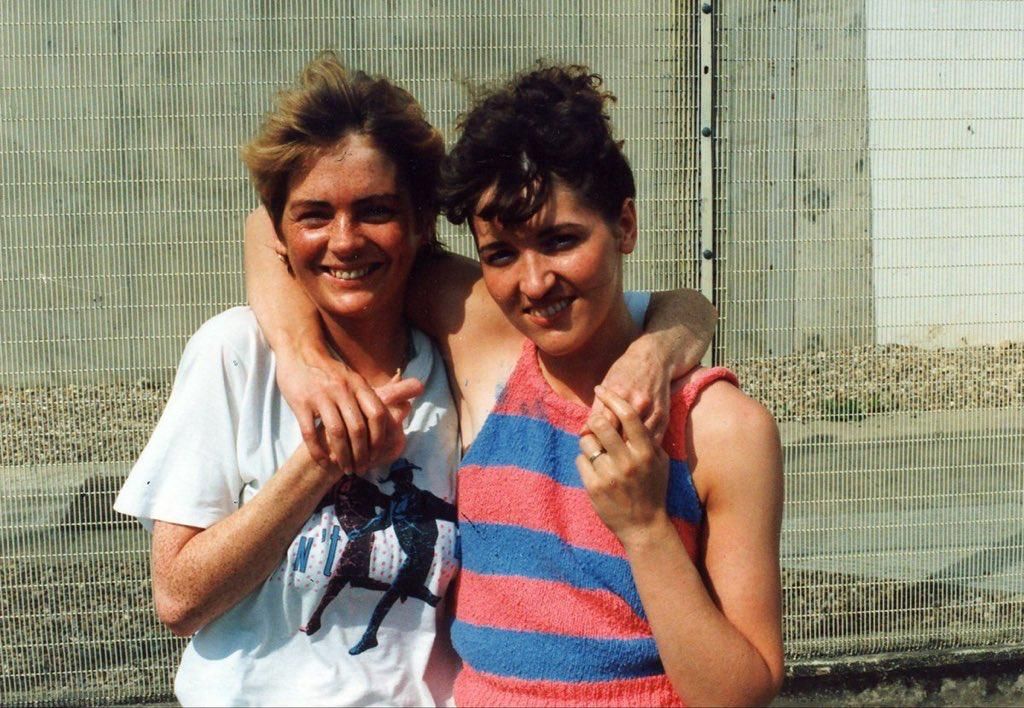
The 1980s marked a transformative period for Irish Republicanism, not only in its political struggle but also in its engagement with feminist and gender activism. As republicans, resisting oppression extended beyond colonial rule to the structures of patriarchy and social conservatism that reinforced inequality. This period saw an ideological shift within the movement, as activists worked to integrate principles of gender equality, reproductive rights, and LGBTQ+ liberation into the broader republican struggle for self-determination. At its core, Irish Republicanism has always sought to dismantle systems of domination. Recognising that oppression operates across multiple dimensions – whether through colonialism, patriarchy, or homophobia – activists within the movement began to articulate a vision of liberation that was not only national but also social and personal.
This evolution challenged traditional narratives that framed republicanism solely in terms of national sovereignty and anti-monarchism. Instead, it reinforced the movement's commitment to equality in all aspects of life, from governance to gender and sexual rights. The increasing engagement with feminist and LGBTQ+ issues during this time laid the foundation for a more inclusive understanding of republican principles. It forced difficult but necessary conversations within the movement and pushed back against the entrenched conservatism that existed within Irish society. This intersection of Irish Republicanism, feminism, and LGBTQ+ activism is a testament to the movement's capacity for growth and adaptation. It reminds us that the struggle for a free and equal Ireland cannot be separated from wider struggles for social justice. The lessons of that era remain relevant today as we continue to confront new forms of oppression and inequality. For Irish republicans, the challenge is twofold: to achieve a 32-county democratic socialist republic free from systems of oppression and to ensure that such a republic lives up to its ideals. This requires grappling with questions of sovereignty and integration in the European Union, the role of internationalism in advancing republican aims, and the necessity of addressing systemic inequalities.
Sovereignty and the European Union
The European Union presents a paradox for us Irish republicans. On one hand, its neoliberal foundations and bureaucratic decision-making processes are antithetical to republican ideals of popular sovereignty and democratic control. On the other, the EU offers mechanisms, if the political will is there to use them, for international cooperation and solidarity, which are essential to addressing transnational challenges like climate change, corporate exploitation, and the rise of the far right. Brexit has highlighted this tension. For some, the departure of the “UK” from the EU represented a reclaiming of sovereignty. Yet, for Ireland, Brexit underscored the fragility of national sovereignty in a globalised economy. It also brought the question of Irish unity to the forefront, as the majority in the North voted to remain within the EU. Irish republicans have historically been sceptical of supranational institutions that undermine self-determination. That is why as a former Sinn Féin MEP, I critically engaged with the EU. Yet, there was and remains a recognition of the need for collective action. The First Dáil's commitment to seeking international cooperation on labour and social rights reflects an early understanding of republicanism as inherently internationalist. There is no contradiction in being a proud Irish republican nationalist as well as proud internationalist. The task today is to navigate this balance – leveraging the EU to advance the aims of a democratic socialist republic while resisting its neoliberal tendencies. The EU must confront its double standards; it rightly stands accused of rank hypocrisy. While supporting Ukraine's right to resist Russian invasion, it simultaneously arms Israel, facilitating unbearable atrocities and genocide in the Middle East. This hypocrisy undermines Europe's credibility and moral authority.
The EU that we need
We need an EU that prioritises humanity in responding to the ongoing humanitarian crisis, supports small and medium-sized enterprises (SMEs), invests in universities, farmers, and rural communities, and strengthens the social pillar of Europe. Instead of pouring billions into militarisation and serving the interests of oligarchs, elites, and global corporations, Europe must focus on building solidarity and sustainability across its member states. But Ireland's place – all of Ireland's place – is in the EU – a reformed and social Europe that is good for rights and opportunities, that is essential for funding and collaboration, that is key to peace and all-Ireland growth. We in Sinn Féin support and promote what is good in the EU and oppose and frustrate what is not. That's what Sinn Féin MEPs stand for in Europe. And those of us who envision a social Europe must actively engage with voters in every member state, as the future shape of the European Parliament is determined by the choices of ordinary men and women – whether they vote in European elections or abstain. Encouraging people to vote for candidates from left and socialist parties is crucial, as such representation could pave the way for a reformed EU that prioritises equality, solidarity, and progressive change. Another Europe is possible, but it depends on empowering citizens to see their role in shaping it through the ballot box. Republicanism's commitment to self-rule is not isolationist. The Irish struggle for independence has always been part of a broader anti-imperialist movement, drawing solidarity and inspiration from decolonial struggles across the world. This internationalist spirit remains vital in the fight for Irish unity and the creation of a 32-county republic. A key question for 21st-century Irish republicans is how to build alliances that transcend borders. In the context of the EU, this means engaging critically with its structures while building coalitions with other progressive movements. The growing divide between the EU's democratic rhetoric and its policies – on issues ranging from migration to austerity – offers opportunities for republicans to challenge the status quo and advocate for a Europe that aligns with the values of equality, social justice, and solidarity.
Economic Democracy and Social Justice
At the heart of republicanism is the belief that true freedom is impossible without economic justice. This principle is as relevant today as it was during the Land War or the drafting of the Democratic Programme. In a global economy dominated by multinational corporations and financial institutions, the fight for economic democracy is central to the republican project. This means reclaiming control over key industries, ensuring workers have a say in the decisions that affect their lives, and prioritising public ownership of essential services. It also means addressing the systemic inequalities that have been exacerbated by neoliberal policies. Housing, healthcare, and education must be recognised as fundamental rights, not commodities. The republican vision of self-rule extends to communities, emphasising the need for participatory democracy at all levels. Local councils, cooperatives, and other forms of grassroots governance must be empowered to ensure that decision-making is truly democratic.
The unfolding environmental catastrophe presents perhaps the greatest challenge to the republican ideal of self-rule. Climate change, driven by the exploitation of natural resources and the pursuit of profit, has created a crisis that transcends borders. Yet, the solutions to this crisis often reinforce existing power dynamics, with wealthy nations and corporations dictating the terms of environmental policy. For Irish republicans, environmental sovereignty is inseparable from self-determination. This means not only resisting the domination of multinational corporations but also reimagining our relationship with the land. The Irish republican tradition, rooted in the struggle for land reform, offers valuable insights into how we might build a sustainable future that prioritises the needs of people and the planet over profit. Constitutional reform offers a chance to embed environmental rights, ensuring protection for nature and the well-being of all citizens, especially those most affected by ecological instability. The fight against ecological catastrophe aligns with the fight for reunification, as both seek to build a fairer, sustainable future for all. This approach frames the reunification debate as integral to addressing environmental challenges while prioritising the needs of working-class and rural communities. Incorporating environmental sovereignty into the republican vision underscores the need for a unified approach to managing natural resources, combating climate change, and safeguarding biodiversity across the island. A reunified Ireland would have the opportunity to harmonise environmental policies, prioritising renewable energy, sustainable agriculture, and green jobs. This vision ensures that the rights of future generations are protected while addressing the disproportionate impact of environmental degradation on marginalised groups.
Sinn Féin and the Advancement of Irish Unity
In recent years, Sinn Féin has made remarkable progress in advancing the cause of Irish unity and asserting Ireland's right to self-determination, positioning these objectives firmly on both domestic and international agendas. The party's leadership during the Brexit crisis was crucial in mitigating its most damaging consequences for Ireland. Brexit, an unmitigated disaster, underscored the undemocratic nature of British governance, particularly for the North of Ireland, where the majority voted to remain in the EU but were ignored by Westminster. Sinn Féin's influence in Europe was instrumental in securing the Protocol, which protected the all-island economy, avoided a hard border, and preserved Ireland's access to the EU single market – even if in the first instance only for goods. Beyond these immediate safeguards, Sinn Féin succeeded in pushing the discussion of Irish unity into mainstream European political discourse, highlighting the provisions for a unity referendum enshrined in the Good Friday Agreement. This achievement not only reaffirmed Ireland's place within Europe but also ensured that the conversation about reunification remains a central and growing priority at home and abroad. This progress underscores the critical role of Sinn Féin in asserting Ireland's right to self-determination and advancing the republican vision of a united, democratic, and inclusive Ireland within the European framework.
Momentum continues to build for the ending of partition and the reunification of Ireland. Across the island, there is a growing recognition that Irish unity is not only possible but necessary to secure a better future for all. Public opinion is shifting, and the debate about what a united Ireland would look like is becoming more vibrant and inclusive. Sinn Féin has been at the forefront of this movement, calling for the Irish government to lead from the front. The incoming Dublin government must prioritise the planning and preparations needed for constitutional change and ensure that referendums on unity are held in this decade. The people, North and South, must have their say in shaping their shared future. Both governments in Dublin and London have a responsibility to foster a mature, constructive, and positive conversation about Irish unity, one that recognises its potential to deliver political stability, economic prosperity, and social justice for the entire island. Sinn Féin's leadership, rooted in republican ideals of equality and self-determination, will remain a driving force in this historic process.
The Republic as a Radical Vision
At its core, republicanism is about more than governance; it is a way of imagining and building a society free from domination. This vision of self-rule challenges the hierarchies and inequalities that sustain exploitation, offering instead a model of shared power and collective responsibility. For Irish republicans, the task today is to articulate a vision of the republic that resonates in the 21st century. This means addressing the challenges of our time – climate collapse, rising inequality, the resurgence of the far right – while staying true to the radical principles of liberty, equality, and justice. It also means recognising that the republic is not a destination but a process. The struggle for a united Ireland is part of a broader fight for a world where all people can govern their own lives and societies. This is the promise of republicanism – not just the absence of monarchy, but the presence of social justice.
Martina Anderson is Sinn Féin National Training and Development Coordinator. She served as a Member of the European Parliament (MEP) from 2012 to 2020, and as a Member of the Legislative Assembly (MLA) from 2007 to 2012 and again from 2020 to 2021. She is a former Irish Republican Army (IRA) volunteer and served 13 years in prison from 1985-1998.