
This interview was produced as part of It’s not for you we did it, a project by curator Sara Greavu and artist Ciara Phillips for Ireland’s biennial, EVA International. The project began through an interest in the work of Derry Film and Video Workshop (DFVW). Established in Derry in 1983 and operating until 1989, the workshop was funded by newly established “publisher broadcaster,” Channel 4, who sought to democratise the process of filmmaking and distribution, and amplify the voices of those who were marginalised on the basis of race, gender, geography, sexuality and class.
Convened around a set of methods that included collective structures and self-representation, DFVW produced a number of films including Stop Strip Searching, Planning, Mother Ireland and Hush-a-Bye Baby as well as enacting various forms of community cultural education. Working to counteract the epistemic violence of depictions of the north of Ireland, its conflict and its people by British TV news and cinema, members of DFVW sought to tell a different story about their lived political and social realities.
In the process of researching DFVW and talking with former members of the collective and the broader community, a picture began to emerge of the complex web of relationships and conditions that fostered its formation: of the groups and movements that were the precursors to DFVW and of the impacts that DFVW had, in turn, on subsequent political and cultural projects. It’s not for you we did it touches on some of the converging factors that created both the urgency and space for DFVW to be established and sustained.
The political context of Derry in the 1980s was shaped by the H-blocks prison Hunger Strikes of 1980/81, which had a galvanising effect on a new generation of activists. Broadcasting bans were in place in both Britain and Ireland that prevented the voices of people with a connection to “terrorist” organisations to be heard on television, and groups like DFVW experienced direct state repression and censorship. Political concerns that cut across the national question were equally present: the economic recession of the 1970s and 80s led to mass unemployment; points of friction between reformist and radical feminist politics fractured the nascent women’s movement in Ireland. But equally, there were well-developed networks of political solidarity that responded to these conditions, and DFVW benefited from the efforts of a handful of key people in providing resources, organisational models and support.
These histories are messy, incomplete - projects have faded from collective memory because of their limited lifespan; there is no agreed narrative among those who were involved. But from these conflicting stories, we can diagram a set of cultural and political tools, sharpened by the experience of coloniality, state violence, poverty, homophobia, patriarchy. By gathering an archive of these relationships, methods, and spaces of activity, It’s not for you we did it attempted to draw these projects into conversation with our own urgent political and cultural concerns today.
Number 1 West End Park
This is the story of how a co-operative housing-refurbishment and scaffolding hire company would come to underwrite a community cultural space; a space that was the incubator for several of the most dynamic and challenging grassroots cultural and political organisations operating in Derry City in the 1980s and 1990s.
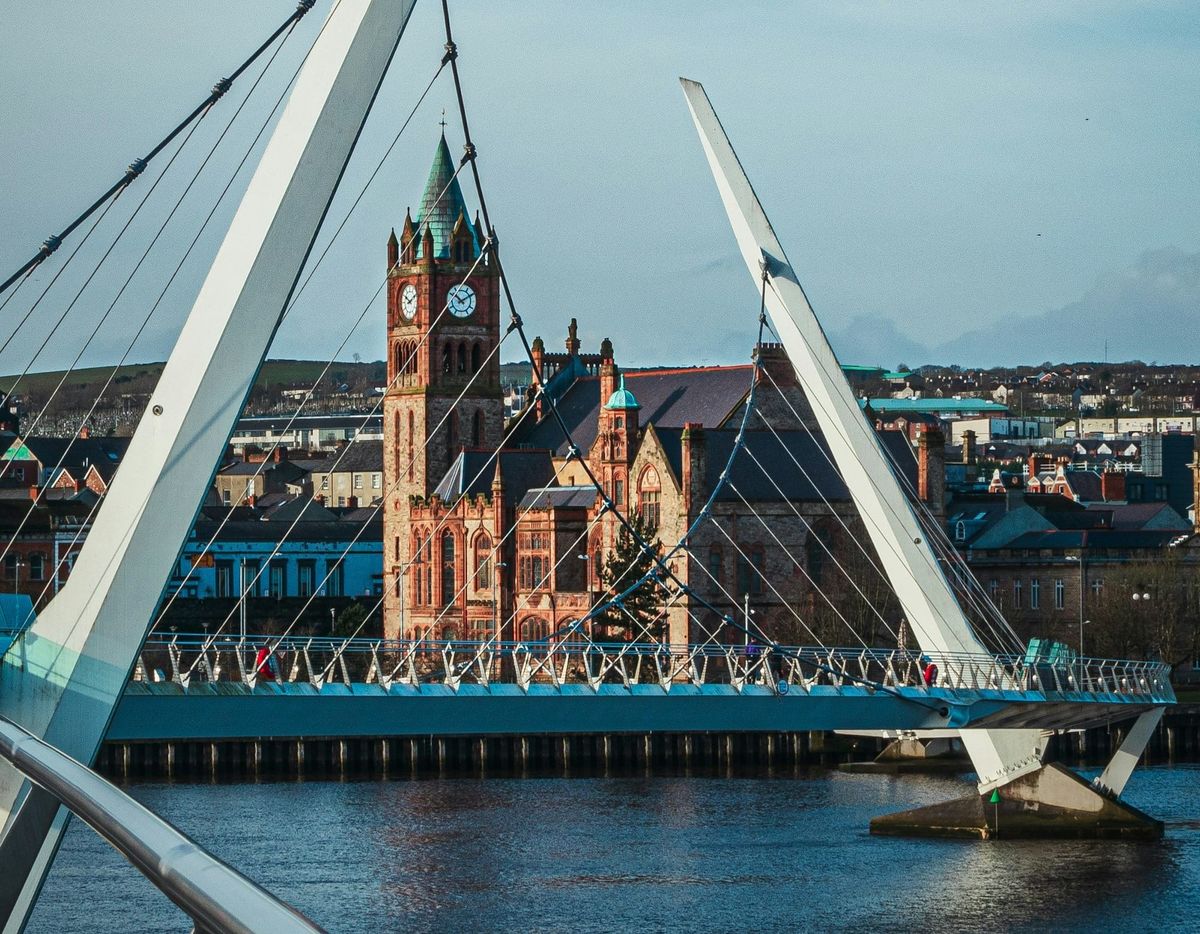
Around 1982, a large early-20th century townhouse located in the Bogside area of Derry, Number 1 West End Park, was sold to a group called the Foyle Co-op. The house had previously belonged to Gerald Stanley Glover, a former Ulster Unionist Party mayor of the Londonderry Corporation, and it was in a state of semi-dereliction when it changed hands.
Over the next decade and beyond, it would be home to a number of collective art and activist groupings. These insurgent cultural and political organisations included Camerawork Darkrooms Derry, a photography training collective; Derry Film and Video Collective (Workshop), a grassroots production company; The Bloody Sunday Initiative, a campaign for justice for the victims of Bloody Sunday; Derry Frontline, a radical cultural organisation and theatre company, focused on work with young people; Free Derry Media, a micro-publishing initiative; and more.
In his political memoir, The Skelper and Me: A Memoir of Making History in Derry, Tony Doherty writes, “We had the whole first floor to ourselves, including one large rectangular drawing room with a bay window giving a panoramic view of the Bogside, Derry Walls, the city centre and the river meandering towards Lough Foyle… The huge house was like a freezer in winter and a sweathouse in the summer. It had a large wooden and glass front porch, accessed by a number of steep steps. In its heyday, there was a tennis court just below the porch, now long gone, smothered under bramble, weeds and rough grasses…”
There was a promiscuous crossover of personnel between groups and sharing of ideas, skills, and methods – from the darkroom on the top floor to the flat in the basement, home to a succession of film-makers, artists and activists who worked in the building.
Each of these cultural organisations deserves its own detailed history, but we can outline some commonalities in their ethos and structure. In general, they were self-initiated and were concerned with oppositional culture and politics. They mostly organised themselves within collective or co-operative structures, that is, with some form of horizontal power structures and shared resources. When funded, whether through arts funding or through government unemployment schemes like the ACE programme, or from a combination of sources, they tended to collectivise any income and share wages equally among members.
The work of organising collectively is complex and difficult. Anecdotes and internal documents from this time evidence, for instance, long conversations negotiating over the payment of relatively small amounts of money, or friction caused by what might be termed the “tyranny of structurelessness.” The hope of the collective is that an ethical integration between radical political principles and methods, or an instantiation in the here-and-now of overarching revolutionary goals, makes these administrative burdens worthwhile. It is interesting to compare these challenges to those faced by the contemporary cultural sector in Derry, which is generally made up of funded organisations operating as limited companies, subject to the hierarchies of company law. Our collective histories of collective organising have largely been lost, and with them, it seems, the possibility of working otherwise.
During the period of the mid-1980s to the end of the 1990s, Number 1 West End Park was under the care of Foyle Co-op member, Mitchel McLaughlin, who created the space for these groups to form and was an influence towards adopting collective structures. Mitchel is best known as a former MLA and General Secretary of the political party Sinn Féin.
While he was deeply embedded in Sinn Féin structures for over three decades, the interview reproduced below is concerned with a parallel political agenda that was progressing on a different time scale. In it, he speaks about the questions he and others were asking about what the shape and texture of a post-conflict society could be, and about the pragmatic steps they took to ensure that art and culture and egalitarian forms of social organisation had a place within it. As we excavate the histories of these social and cultural moments, it can seem like we are holding a fragment of a possible map of the future, rendered at a 1:1 scale.
Sara Greavu: Can you tell us how your involvement with Number 1 West End park began?
Mitchel McLaughlin: Well, as part of my “political project” if you like, in this town, in 1972, I was a founding member and Secretary of a project called the Foyle Co-op. It was a small group of republicans, but republicans who in their own private lives had formed small social enterprises and small businesses. The Foyle Co-op was formed in the middle of a campaign protesting against internment without a trial. We were thinking, “well, what happens if we succeed and the internment policy is defeated?” because these internees were just lifted, literally from their homes and from their places of work, and jobs were lost and whatever, so the Foyle Co-op was formed to provide employment opportunities for these people on their release.
The Co-op was formed, in the first instance, around a cadre of skilled tradespeople who would then pass on their skills to others who essentially had none, and give them an economic opportunity. So we took on a maintenance contract with the Housing Executive. Even in government bodies in those days, there were progressives; people who could see “well, okay, what happens at the other end of this?”. In the Bogside and Creggan areas of Derry, we were able to compete and win contracts for major refurbishment projects that the Housing Executive was carrying out on the housing stock, because the politics of the time had a major focus on the quality of housing and the provision of new housing stock.
So Foyle Co-op had a program and element to play in this major programme. And so former internees were earning good wages, and if they didn’t have the skills, they got the opportunity to work along with people who were already tradespeople and so on, so forth. I’m giving you the background though it had much broader goals in terms of meeting our political ideals, as well as self-help and self-reliance.
You soon discovered that the co-operative principles were very difficult for people whose politics are only developing. The ordinary work meetings were meant to be an opportunity for discussion and debate on chosen topics, all of which reflected a more socialist analysis, but those meetings turned out, over a period of time, to be very sparsely attended in comparison to the AGM [annual general meeting] where we calculated the operating profits and therefore the dividends… because as well as being employees of the co-op, they were owner-members. So they were very often interested in the dividends more than [the discussion]. At the time, I used to get quite cross with some of them because they’re all making out they were great republicans and, you know, ‘right on’ republicans, but when it came into the practice of it, some of them found it quite difficult. Eventually, the contract ran out, and also the Co-op itself ran out of steam. I was a refrigeration engineer at the time, but more and more of that work was falling on me, and I was being dragged out of my own work, which had nothing to do with the Co-op. The key thing, we thought at the time, is that the directors and the officers of it received no remuneration or no dividends or any of that. It was either reinvested in equipment or it was given as a dividend to the workers, and that wasn’t a bad principle… Anyway, I was quite happy with it.
So, eventually, we diversified as the contract ran out. In the process, we had purchased a significant amount of scaffolding. We then began to hire that out and in the midst of that, during the period of very, very severe economic decline as well as the conflict going on here, various types of unemployment schemes were introduced, and so we formed a subgroup which was thrown a salary from the rental for the scaffolding and we also then established the Derry Youth and Community Workshop which continues to this day.
Derry Youth and Community Workshop weren’t developing people [in the sense of] trade skills, but we were content to take young people who were unemployed, and [work with them] in whatever way they wished to express themselves, and in some cases that was they wanted to learn trades. We tried to get them jobs and apprenticeships and so on. Others wanted to express themselves in more artistic ways; through photography, video production, artwork. We turned attention, for instance, to the amount of graffiti that was about here, because it was virtually a war zone, but we started exploring ways of getting your political demands and messages across in a more presentable way that people can recognise and could absorb and could interpret for themselves and understand. And the cityscape was to be their palette, rather than just kind of scrawling freehand. Derry was good at that, you know. I would say around 1969, so like a year after the Civil Rights situation erupted, on a local bookmakers was scrawled the slogan, “WE WANT BETTER ODDS,” a classic kind of civil rights demand: we want better odds. But it spoke also to the way in which humour could be used and the way in which visual presentation could be used to get a message across. We often used that as an example and then just invited young people to come up with their own messages, which were to do with things like human dignity, recognising difference, recognising sexual diversity, all sorts of issues. And the Workshop was particularly good at this and it was a very progressive place and I gave a couple of years at it as a development officer. Out of that came the budget or, if you like, the pot that allowed two things to happen.
The initial phase was the Co-op, then I gave two years to the Derry Youth and Community Workshop, that was the deal I made at the time, from maybe 1976 to 1978, and I stepped away from it then. One of the places that we had invested in, as a base for the scaffolding operation, was a farm just in the outskirts of Derry and the other thing was West End Park; and it was the Co-op that purchased both. Once the major contract with The Housing Executive was gone, then it was a question of whether we could break the Co-op down into smaller units or whether we simply had arrived at a departure point and that’s what we concluded. So the Foyle Co-op was wound up and all outstanding tax and accountancy protocols addressed, those who had new skills went off and got themselves work and employment, which was the initial project in any event. But we then decided, you know, we have to sit down and decide what we’re going to do with the resources. And not everybody stepped away, because the social and economic issues of a society in conflict with the state demanded a response and leadership.
So first, in the early 1980s, I can’t remember the sum now but it was close to a six-figure sum to purchase West End Park.
Number 1 West End Park was devoted just to learning space [and community space], there was the floor that the Bloody Sunday Initiative could occupy and then the relatives’ campaign that flowed from that, also the Camerawork collective and then the Derry Film and Video Collective.
Sara Greavu: So would organisations like Camerawork or Derry Film and Video Workshop have been paying rent?
Mitchel McLaughlin: Yes. Ah no, they had to pay their way, but I mean it was a peppercorn arrangement. The main thing they were responsible for was to maintain the building in the condition they got it. It was already a fairly old building that had been abandoned for a number of years by the previous owner. It belonged to one of the bastions of unionism locally, so there was a delicious irony in the fact that this crowd of radical revolutionaries ended up owning it. But all that the tenants basically had to do was, between their collective commitment and resources, maintain the property: keep it weatherproof, keep it warm, pay the rates and pay the electricity bills… and they each did that. You know, they were all working in different areas but, I think, to similar goals and intentions, which is for the community good. I think it was a better form of cooperation than the one that we got initially with the Foyle Co-op. That was a very important early lesson in reality for me.
But West End Park, even today, and it’s in a much depleted state, it’s still kind of providing a service and I’m quite happy to have stepped back from any responsibility. It had to be protected at a particular time and that I saw this as my role and function because of those who may have assumed that they had more rights than they actually had. You know, you sometimes had to remind them who, in fact, was the beneficial owner, the Foyle Co-op. Whenever there was a question of selling it I resisted any notion.
The accountants would recommend that we just sell it there and then and give the money away. But at that stage, there was just too much happening in it; it was quite a vibrant hub and a very creative space, which produced all sorts of interesting outcomes. I protected it from that and also from the people who maybe had no long-term interest in it and just wanted to exploit the building, so it had to be defended from that as well, a few times.
Sara Greavu: I just think you can’t overestimate the power of just having space.
Mitchel McLaughlin: And nobody saying there are rules or there’s regulations or whatever. One of the things that I was always careful about, if they took on the project, they agreed with me what they’re going to do and I stood back and let them do it.
Sara Greavu: And you were balancing your own (small ‘p’) politics and your Political work?
Mitchel McLaughlin: But there was a boundary there that had to be protected, and not everybody understood what they were at, including within Sinn Féin, or maybe even within the IRA locally. People would have come along and said, “Here,” you know, “that’s our project.” What I was saying is that it’s broader ownership than that, right? And I like to think that quite a lot of the people who passed through that building were politicised and developed republican politics, anyway, you know, but in a very productive way. The thought police may take a different approach, but that’s just a complete mistake – there were people who developed skills or had innate skills that needed to be developed, and the fact that there was no rule book or no restriction on what they did is what allowed that to emerge and people could see what was there. I’m sure those that were in contact with me would recognise that I very rarely would have inserted myself or provided any kind of difficulties about what they were at. In fact, I didn’t at all times know what they were doing. I just was glad and proud to see the product of what they were doing because, in the vast, vast majority of cases, it was good stuff. It was helpful stuff.
Sara Greavu: What gave you that understanding of what art can do or what that kind of cultural production can do, in a political sense, because I feel like it’s a little bit out of step with broader republican politics of that time? There’s something special about Derry at that time, and when you follow these stories, they often lead back to you and West End Park…
Mitchel McLaughlin: Well, the key formative influence for me was Mondragon, the Basque Co-op… but co-ops then in general. So we went up to see what Father James McDyer was at in Glencolmcille, and that was a form of co-operative. But it was also, as far as I could see, very rigid and centrally controlled, so it was kind of the polar opposite of what I thought a community development project or co-operative should be. But Mondragon was different, you know, because it was big business in a big way, but there was direct community ownership and benefit and that translated socially and politically. And that fusion is what interested me because, at the end of the day, I was first and foremost a republican and have been an active republican from 1966.
In the aftermath of the IRA campaign of the early 60s, there was a major debate going on in republicanism about armed struggle and socialism overtaken by the civil rights struggle which derailed that conversation. I thought it was quite a positive and progressive conversation, but it brought with it schism and splits and whatever, but anyway, those kind of formative ideas were cemented, I suppose, by two early trips across to Mondragon just to have a look at what they were doing. I would say it was probably around ‘74-’75 and they were two trips in close order after the civil rights.
I was present at the [1968] 5th of October [civil rights] March in Derry that was attacked, but I was already under contract out of Dublin to go into the international voluntary service, to go to Zambia which was newly independent, about 4 years independent at that stage. I was to go to Tanzania first, but then that got derailed because of the civil rights thing, and I wasn’t able to go. Later on that month of October 1968, I went out to Zambia, but then the balloon basically went up here. So I shortened what was intended for twelve months in Lusaka to six months and came back again. So, that was it. The battleground was here; that’s where the politics of it developed… so a couple of years just on the streets basically. Although I was holding down a job. I mean, generally speaking, I had always got work, but I was also my own boss and could take the time off if I had to do a bit of work with the Co-op or anything of that nature.
Sara Greavu: Can you talk a bit more about the Mondragon model and cultural production and self-representation? I mean, this was at a time when there was a movement around Europe, and beyond, of questioning the way people, working-class communities, for instance, were being represented and sharing the tools and skills for people to represent their own communities and lives.
Mitchel McLaughlin: Well, I think the thing that came out of the Basque Country generally was the way in which they presented their political philosophy. It was done through the co-op in that it was obviously one of the funding mechanisms. And they produced, on almost industrial scale, banners and flags and merchandise of struggle, which was very artistic. You find right across Europe at that time when there were a lot of student protests and whatever going on, and you had Vietnam and all of these things that they were replicating this model either consciously or unconsciously. Those of them that visited the Basque Country came back with the same impression of the colour and the vibrancy of what they were doing as much as what you could see in terms of monetary benefits… they had a very lucrative economy.
But there was just a philosophy, you know… even simple things that I discovered. Those of them working in the various engineering projects, their disposable income was distributed in a way that they wouldn’t go into a particular bar or restaurant to spend all their disposable income. They would visit, in turn, along the district, each bar. One drink here, one drink there. Everybody’s getting a share. It was a wee simple thing; they didn’t even have to talk about it, it just was part of their philosophy. So even as a visitor, that was very gently and politely explained to you what they were doing, which is what you should do… is what they were saying. So we were trying those kind of ideas too. It didn’t take root in the same way here… because, you know, if the Foyle Co-op had maybe continued to develop, we may be riding around in big cars, but I think we would have lost a lot of the learning experience. No, it just developed in a different way. But there, it’s instilled in their local culture.
Sara Greavu: Why do you think the co-op ideals didn’t take root here to a greater extent?
Mitchel McLaughlin: It’s about self-sufficiency and self-belief, and we had neither during this formative time apart from that group of people that I met. I’m sure there are others, but those of them that were self-sufficient who were maybe independent, who had skills, who maybe had the benefit of secondary education—which a lot of people didn’t—who maybe had the opportunity for professional development, they were of families and homes that were oppressed and depressed and didn’t know wealth. So there’s that kind of stress, you know…in the middle of the war and the middle of all the efforts by the government, to try and stave off this conflict, then opportunities were opening up for people who had no kind of politics at all, people that became the middle class of our local community. They’ve become the wealthy and the property owners now, but they’d no part or art in the struggle, and they probably don’t even realise that they left anybody behind them or that they could have done it a different way. It’s just, they’re oblivious. I think that was our problem. We were starting with nothing, and when things started to ease up, there was a cadre of people, a small minority, who wanted to do this on behalf of the community and that’s why the focus on community development. While everybody else would have an opportunity, they went, “That’s right, that’ll do me, and that’ll do my family.”
And the forces of the state were also working against it. I probably have a copy of a report by Terry Robson, who is dead now, and Seamas Keenan; the title of the report was “Community Work: a low intensity operation.” Because we were in the middle of a war. So as well as the repression, special powers, special courts, and whatever you also had these make-work schemes, you know. Nobody was learning anything. If they were learning anything, it was to be cynical, to be angry, to be frustrated. But if you went over to the dole, you were getting no dole unless you signed up for these ACE schemes… just make-work. Their report was an interesting take on republican and socialist struggle at the time against a background where the state was pouring millions into ACE schemes.
Sara Greavu: Sometimes the temptation is to say, oh well, that didn’t last very long, so it didn’t matter… this thing fell apart, or the collective stuff was too hard to maintain…
Mitchel McLaughlin: But I actually think those moments, the longer they last, the more chance of them losing their way, for sure. I mean, it’s like there’s a life cycle, I guess because you’re working against the grain of our society.
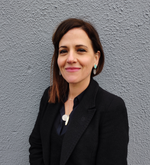
Sara Greavu is the Director of Fire Station Artists' Studios and also works independently as a curator, writer and organiser. Independent projects include Open the book at a different page, a research exhibition produced with artist Ciara Phillips and former members of the Derry Film and Video Workshop, which dealt with intertwined political and cultural initiatives in Derry in the 1980s.
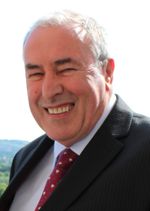
Mitchel McLaughlin is a long-time Sinn Féin politician and republican activist. He joined the party in the 1960s during the civil rights movement and later took part in H-Blocks campaigns. Elected to Derry City Council in 1985, he became an MLA in 1998 for Foyle and in 2007 topped the poll in South Antrim. From 2015–16 he served as the Assembly’s first nationalist Speaker.