
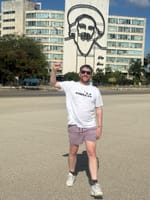
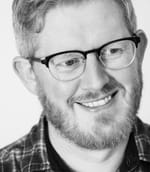
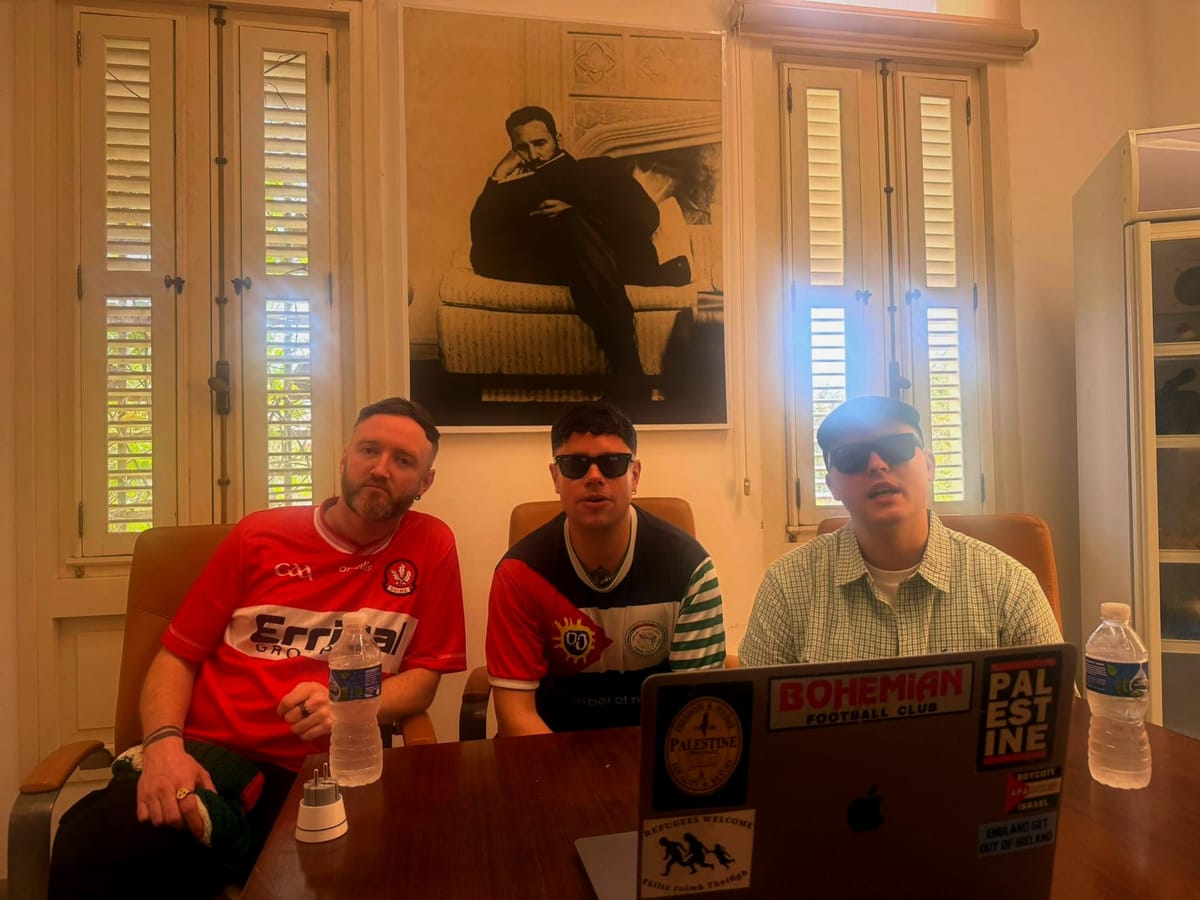
Dan Lambert is the manager of Kneecap, the internationally acclaimed Irish language rap trio and stars of a major film, whose member Mo Chara has been unsuccessfully prosecuted by Britain’s Crown Prosecution Service. Lambert recently travelled with Kneecap on the Nuestra América Convoy to Cuba, delivering medical aid and drawing attention to the escalating humanitarian impact of the US blockade. He is also Chief Commercial Officer at Bohemian Football Club in Dublin, and previously worked for the Irish Department of Foreign Affairs at the United Nations in New York. Lambert is an outspoken public critic of imperialist attacks on Palestine, Cuba, and Iran. Oisín Gilmore from An Clogán spoke with him about his experience on the convoy.
Oisín Gilmore: Firstly, welcome back from the convoy to Cuba! I suppose my first question is simply: why was a convoy like this needed?
Dan Lambert: I think it was needed for two main reasons, and it is hard to say which is more important.
First, there is an urgent humanitarian need for a whole range of items. The convoy as a whole brought a range of items; food, sanitary products, toiletries and medicines. We brought medicine, because of its value relative to weight, given that we were flying. Ships coming from Mexico brought bulk items like rice, which would not make sense to transport by air.
In total, I think it was around 26 tonnes of aid. For individuals receiving life-saving medicine, especially some of the more complex treatments, that will have an enormous impact. But, by and large, the aid will be used up quite quickly and will not have a long-term effect.
The second reason was to raise awareness. There is very little discussion or media coverage, particularly in Europe and definitely in Ireland, about what is happening in Cuba. The international element of the convoy was designed to include well-known figures, including Kneecap, who could draw attention and reach wider audiences in their home countries.
Oisín Gilmore: In terms of raising awareness, could you say a bit more about what exactly you are trying to highlight? Obviously, the focus is the US embargo, which has been in place a long time, but you have said it has escalated recently.
Dan Lambert: Yes. The US embargo has been in place for over 60 years. Under Barack Obama, there was some easing, for example the reopening of the US embassy in Havana, but it did not translate into anything hugely impactful for ordinary Cubans.
Since then, under Donald Trump, the situation has escalated significantly. One major change is the effective fuel embargo on the island, which is relatively new. Previously, fuel was not targeted the same direct way. It’s difficult to say exactly why Trump is doing this now. But, after kidnapping Maduro, and seeing as most of Cuba’s fuel came from Venezuela, he saw this as an opportunity to cut fuel off from the island.
The impact of this is enormous. Removing access to fuel removes people’s ability to function in a modern economy. It affects everything: electricity, food storage, hospitals, water treatment, and waste removal. Without power, society grinds to a halt.
You now have increasing rolling blackouts, astronomical fuel prices, and severe transport issues. We saw thousands of people trying to move around because transport is so limited. There are also issues in agriculture. Crops cannot be harvested or transported because machinery cannot operate.
Oisín Gilmore: And on medicine specifically, you mentioned you brought medical supplies. Why is medicine such a particular issue?
Dan Lambert: Medicine shortages have been a problem in Cuba for years. That is largely because the US blocks access to key inputs, the components needed to manufacture medicines, as well as certain medical equipment.
Some essential equipment, especially in areas like cancer treatment, is manufactured in the US and cannot be imported. But US is also enforcing secondary sanctions. Countries or companies that trade with Cuba can face penalties, so Cuba is effectively being cut off from global supply chains, not just the US.
What is particularly frustrating is that, at the UN, certainly when I was at the UN, almost every European country votes every year to end the embargo. But it is non-binding, and none of them take concrete action. Even now, in one of the most difficult periods that Cuba has faced, not one country in Europe has followed up on those resolutions. So, we have an entire continent that says this is wrong, but they have completely failed to take action, which reflects a kind of subservience to US policy.
Oisín Gilmore: Could you tell us a bit about the convoy itself? Who organised it and who was involved?
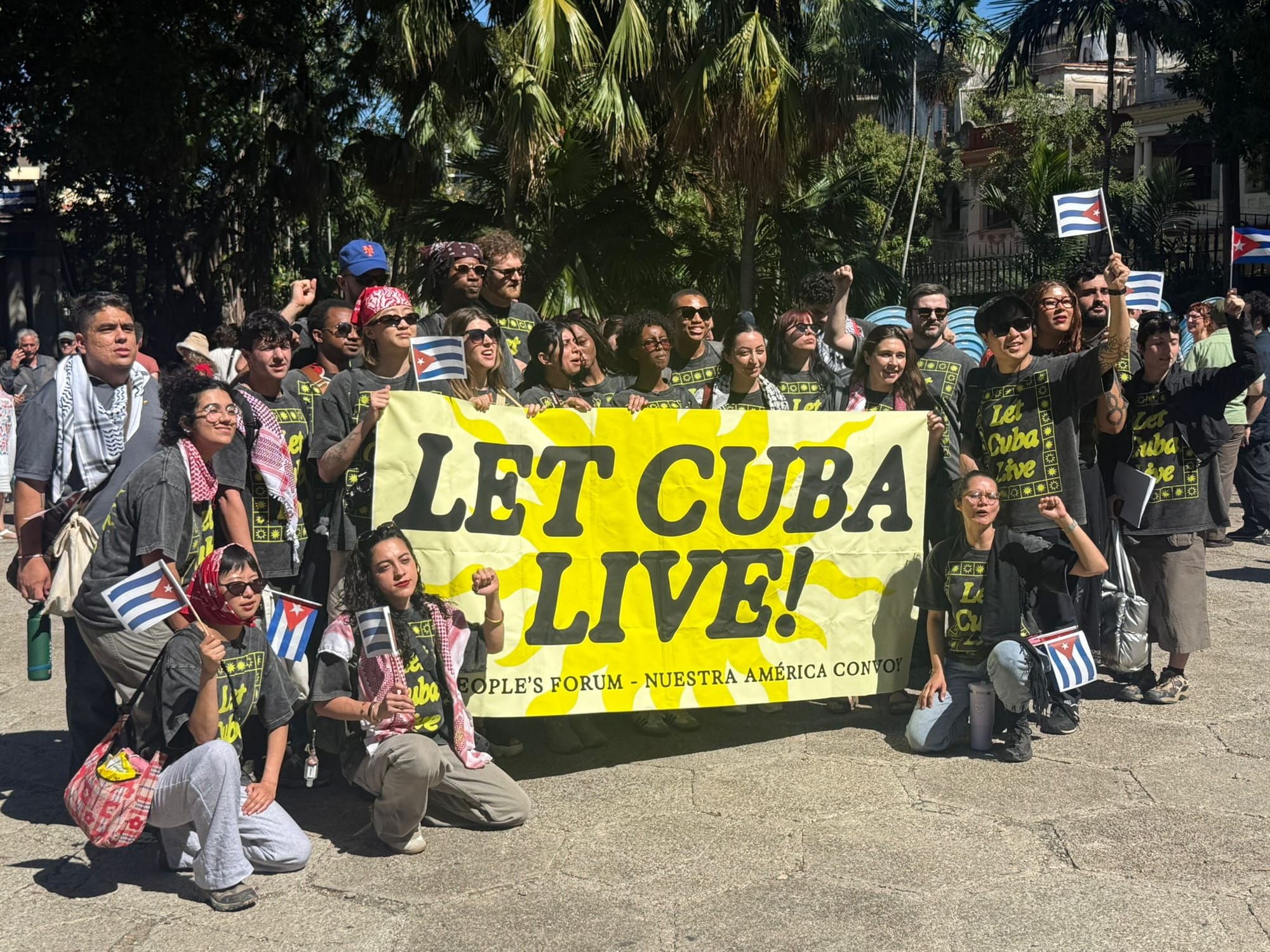
Dan Lambert: It was organised by Progressive International. They brought together a wide range of participants.
There were a lot of ordinary people, especially from Central and South America, including crews on the boats. The international delegation included public figures like Jeremey Corbyn, Hasan Piker, Chris Smalls, and others, as well as parliamentarians from different countries, for example representatives from Colombia and Mexico.
The idea was to bring together a broad coalition that could both deliver aid and generate media attention in different countries.
And with Kneecap there was broad interest across South America and North America. For example, CNN wanted to speak to Kneecap, but we made it clear we were happy to speak to any media organisation, but only on why we were in Cuba, and not on any other issues.
Oisín Gilmore: And how did the convoy actually work? Some of it went by air, some by boat. Were there any obstacles getting into Cuba?
Dan Lambert: Most of the aid, probably around 90 percent, came by boat, mainly from Mexico. People travelling by air brought smaller, high-value items like medicine.
One of the practical challenges is that there are no longer direct transatlantic flights to Havana due to the fuel shortage. So, flights now route through places like Panama.
For us, we obtained visas through the Cuban embassy in Dublin and filled our carry-on luggage with medicine. We worked with doctors in Ireland, including Dr David Hickey, who helped identify the most urgent supplies and prioritise them based on weight and impact.
In total, we spent around €10,000 on medicines, but a lot was donated as well, with some additional supplies provided at cost price through pharmacies and medical contacts.
Oisín Gilmore: Were there any repercussions for people involved? I think I saw reports that Chris Smalls was arrested when he returned to the US.
Dan Lambert: Yes, there were some issues. Chris Smalls was detained, and I believe a Brazilian participant was also held in Panama. There does not seem to be any clear legal basis for these detentions.
Oisín Gilmore: Do you think the convoy was a success, given the scale of need in Cuba?
Dan Lambert: In terms of addressing the overall situation, no. What needs to happen is the removal of the illegal US embargo. Without that, nothing changes fundamentally.
The second thing is that countries in Europe, and Canada, Mexico, Brazil, and others, need to show the US that they're not going to be a part of a totally illegal blockade.
But in more immediate terms, yes. The aid delivered will make a real difference to individuals, particularly where life-saving medicine is involved.
You hear a lot today about precision airstrikes, and whatever you think about that, there’s no precision to this blockade. It affects everybody: mothers, babies, everybody. It’s an insane level of cruelty.
Most importantly, I think the convoy has helped raise awareness. That is critical, because the situation is not widely understood.
One striking example I heard was about Russian oil shipments being deterred. The US threatens shipping companies with the seizure of entire fleets if they deliver to Cuba. These are companies with assets worth hundreds of millions of dollars. It is an extraordinary level of coercion, something you would associate with imperial powers centuries ago.
Oisín Gilmore: Could you describe what you actually saw in Cuba?
Dan Lambert: It is a very contradictory experience.
On one level, it is a place I had always wanted to visit. The people, the architecture, the political history is very interesting. But all of that is overshadowed by the current situation.
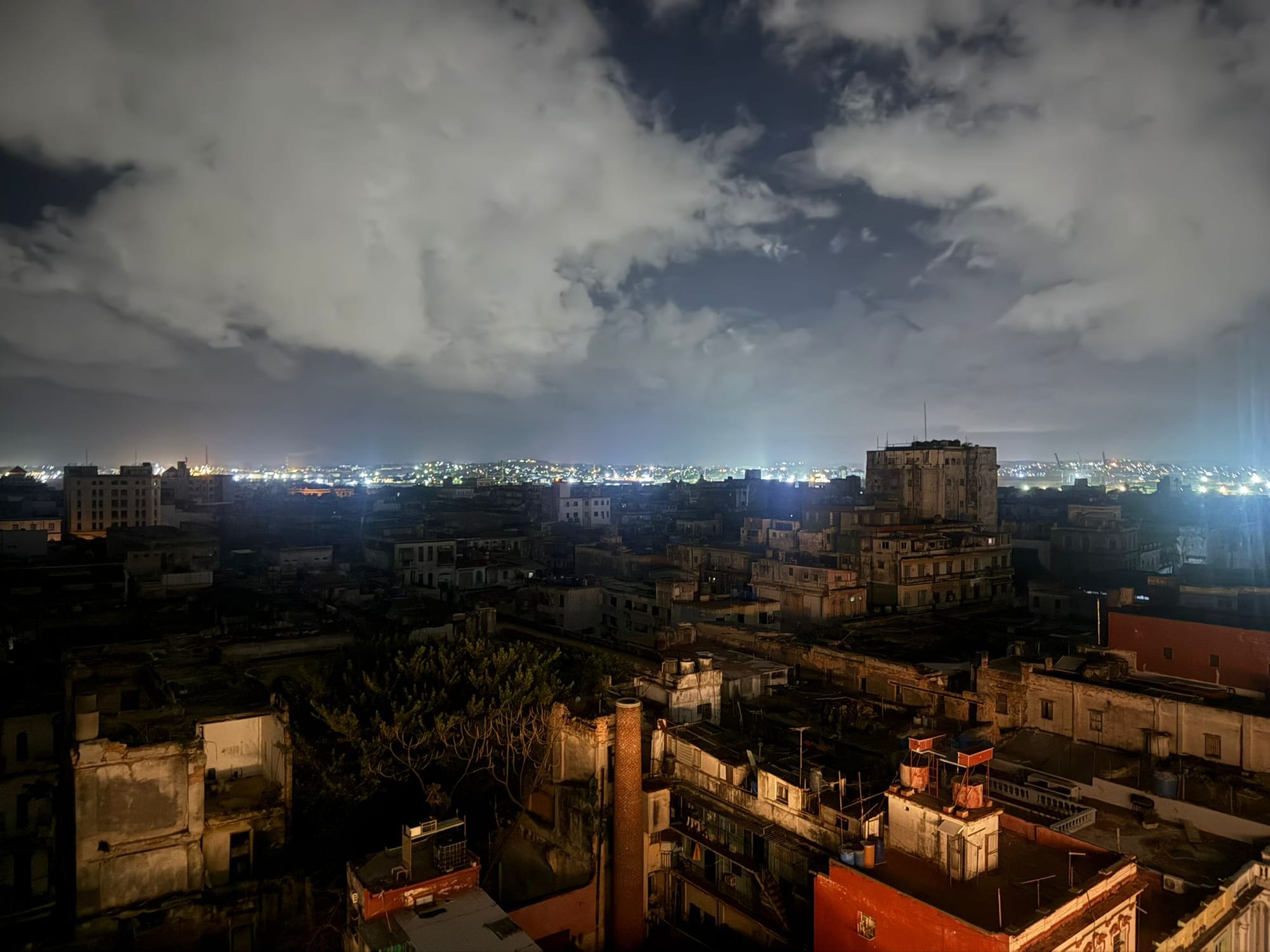
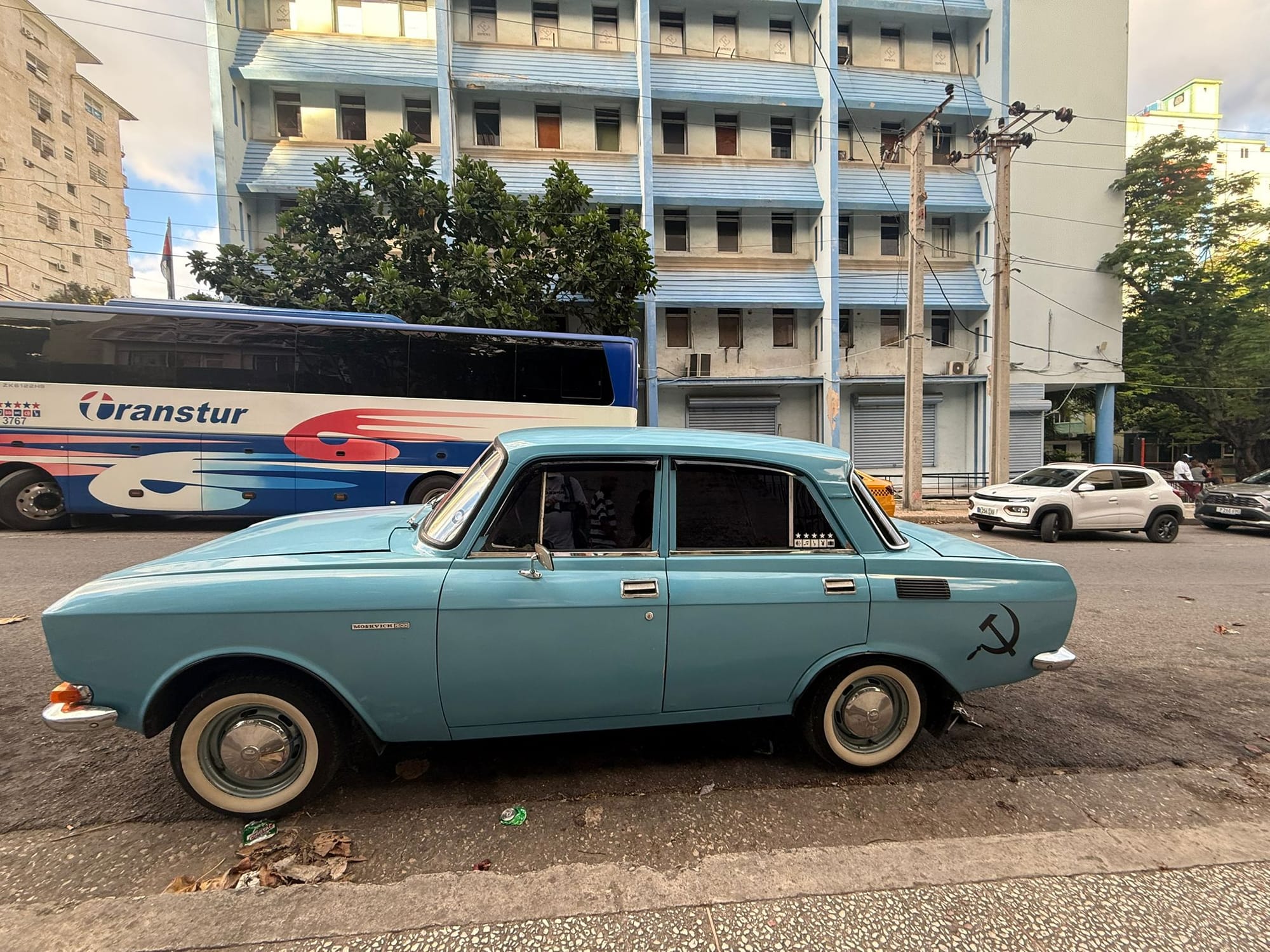
There are very few cars on the streets. Havana feels unusually quiet for a capital city. We saw huge queues, for example hundreds of people queuing for bread at a state-run bakery.
Pharmacies were almost completely empty, maybe two or three products at most. There were many people asking for money, which I understand was not as common before.
At the same time, I never felt unsafe. People were friendly, and there was no sense of threat.
During blackouts, you would see groups of children playing outside with torches, people singing, or families sitting together by candlelight. There is a kind of resilience, but the country feels like it is right on the brink.
Tourism has also collapsed, which removes a key source of income.
Oisín Gilmore: I also saw some claims online about a Kneecap gig causing power outages?
Dan Lambert: That is completely false.
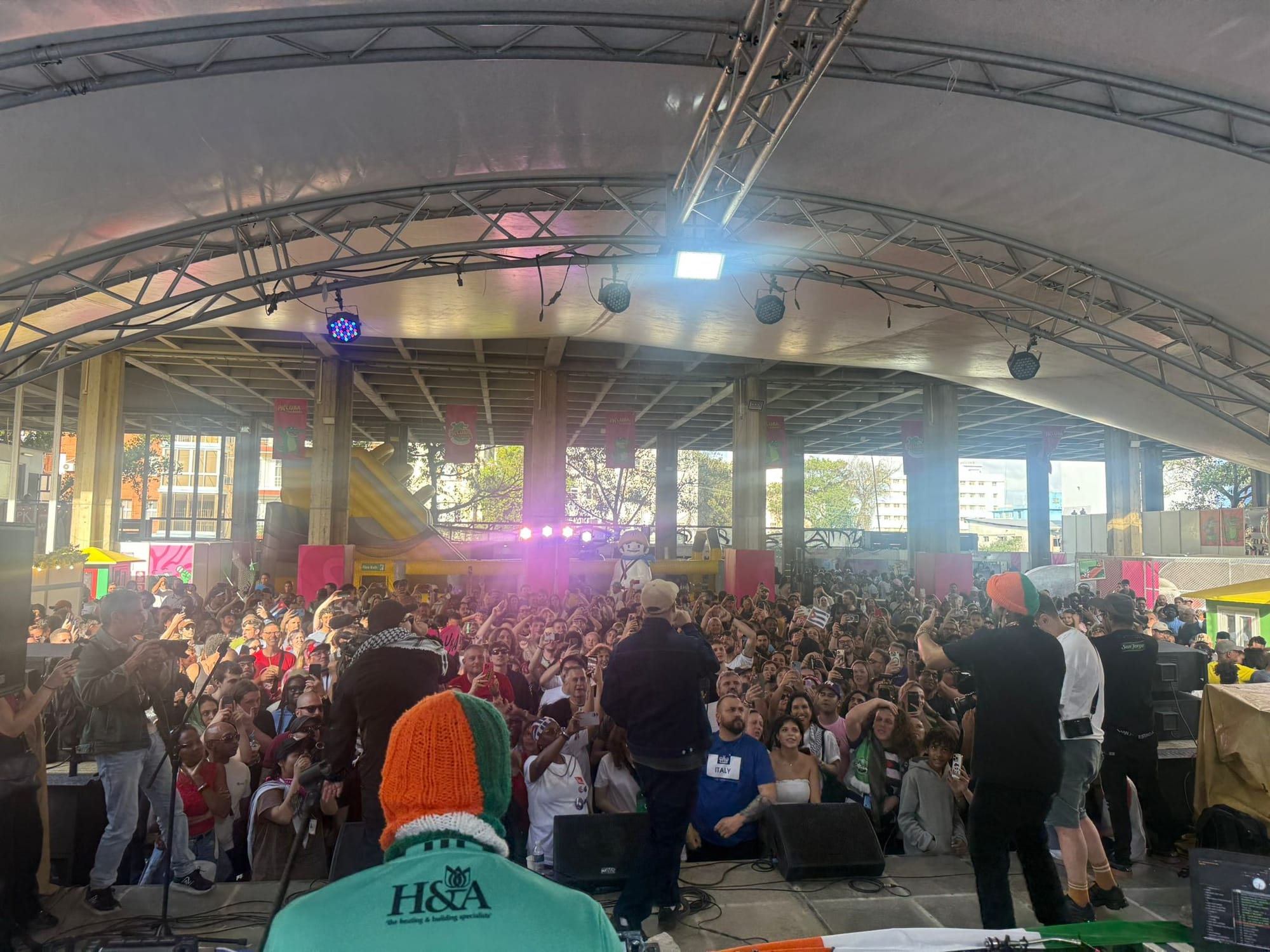
We did not travel to perform. We visited a community centre, the Pabellón, which runs free weekend events for families. It is essentially like a community fair, with music, games, and food.
There were local performers, and Kneecap were asked to perform a couple of songs between acts. It was a very basic setup.
The idea that this somehow knocked out the power is fairy tale stuff, but it shows how misinformation spreads online.
Oisín Gilmore: When Kneecap announced the trip, Leo Varadkar responded by suggesting they should also call for free speech and assembly in Cuba. How would you respond to that?
Dan Lambert: I think it is pretty pathetic. Kneecap were there as a music act. And were there to address an immediate need. There is an illegal embargo causing an immediate humanitarian crisis, where people are struggling to keep their food edible. This embargo affects every aspect of life, including food, medicine, and electricity.
If you are talking about priorities, ending the embargo is overwhelmingly the most important issue. I’m sure there’s a long list of reforms that could improve lives of people in Cuba, but nothing comes close to the collective punishment of the Cuban people that that embargo is causing. And that’s the prism through which the current moment has to be viewed. Anything else doesn't make any sense.
Kneecap were not there to comment on Cuba’s political system. They were highlighting what is being done illegally to the Cuban people. And I think most people understood it in that way.
It also feels quite rich coming from someone who has travelled to countries like Saudi Arabia, which have infinitely worse, more oppressive systems of governance. I doubt Leo Varadkar ever said anything to them. So, it's pretty rich and ridiculous.
There’s a lot of politicians, often loyalist or British politicians, and I guess now Leo, who use Kneecap’s name to try to get themselves some coverage.
Oisín Gilmore: What should the Irish government, and European governments more broadly, be doing?
Dan Lambert: At a minimum, they should act consistently with their own stated positions.
The illegal US actions are just being accepted. We had our own Minister of Foreign Affairs who said “I can’t say” if the bombing of Iran was illegal, when it was so obviously illegal, as every expert on the planet will tell you.
Gaza showed this willing silence. But now it’s Gaza, Venezuela, Cuba, Iran, Lebanon at the same time. But, while what Spain has done is good, Europe broadly seems completely incapable of any response. There appears to be a fear of doing anything that is out of step with the US and that’s the frightening reality.
Ireland and other European countries vote every year at the UN to end the embargo. But when conditions in Cuba worsen, they do nothing. I could be wrong, but I don’t think a single Irish government politician has said a word about it.
Oisín Gilmore: Finally, what would you say to readers who are wondering what they can do?
Dan Lambert: It is difficult, to be honest.
Raising awareness is important. Talking to people and making the issue more visible. But in practical terms, there is very little individuals can do.
Even on issues like Palestine, where there is huge public support, governments have taken very limited action. So, it is hard to be optimistic. Especially with Trump’s recent comments that he might invade Cuba.
That said, awareness still matters. At the very least, people should understand what is happening.
Dan Lambert is the manager of Kneecap and Chief Commercial Officer at Bohemian Football Club.
Oisín Gilmore is an editor of An Clogán. In his day job he is Senior Economist at TASC (Think-tank for Action on Social Change). He is co-editor of Fragments of Victory: The Contemporary Irish Left (Pluto Press: 2025).